Pamukkale
About Pamukkale
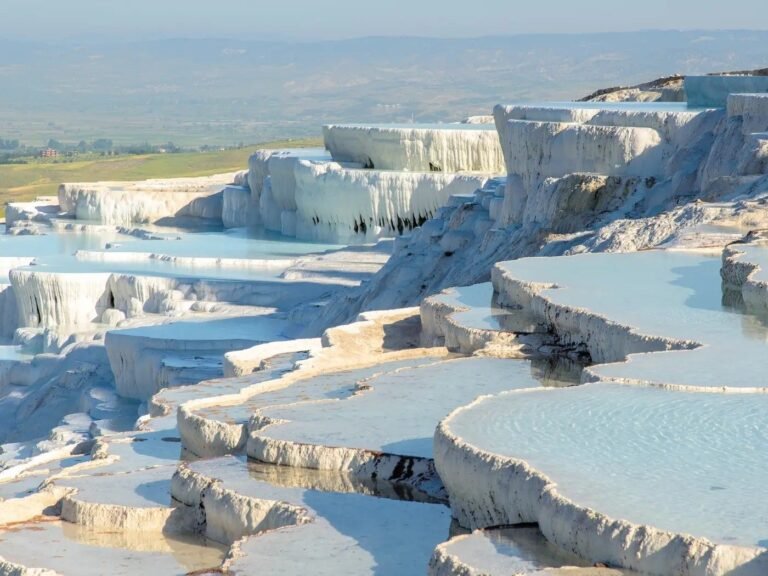
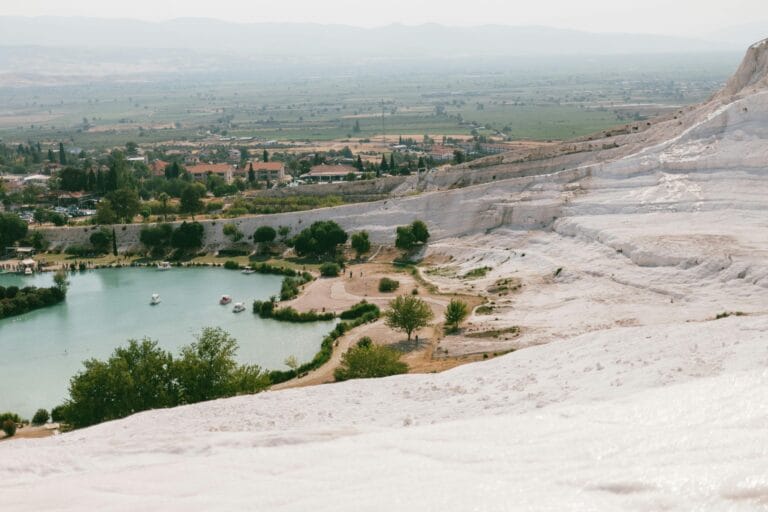
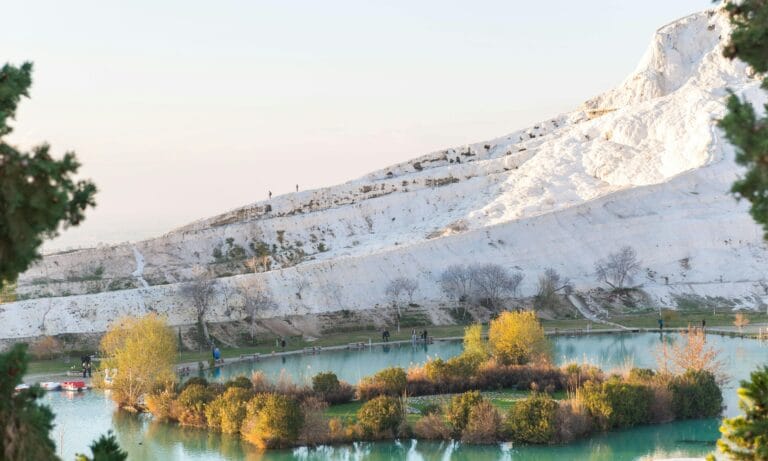
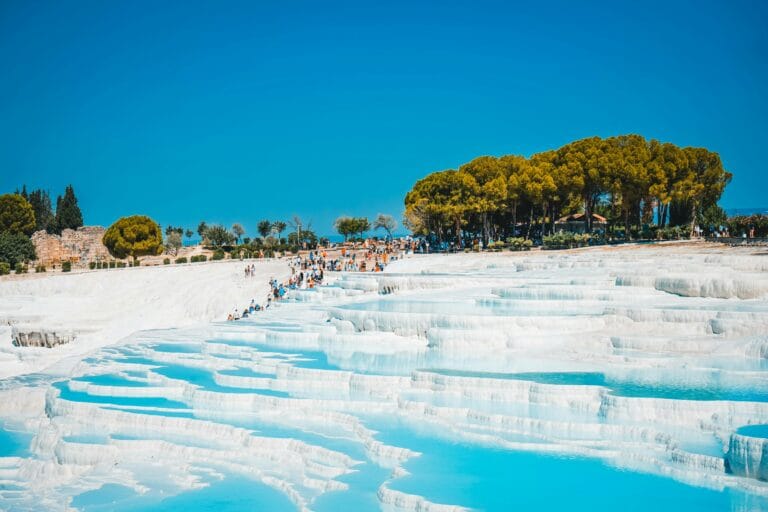
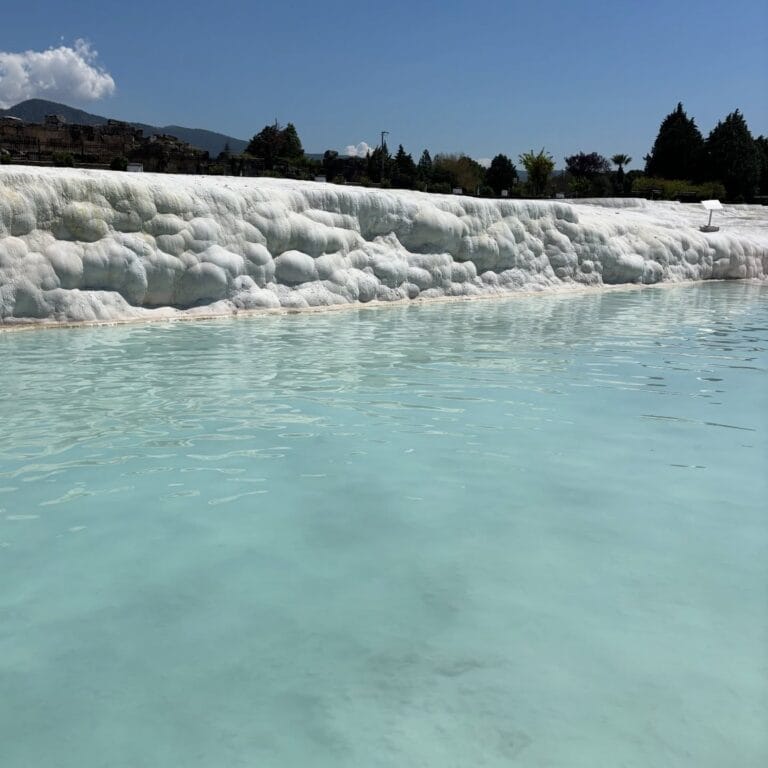
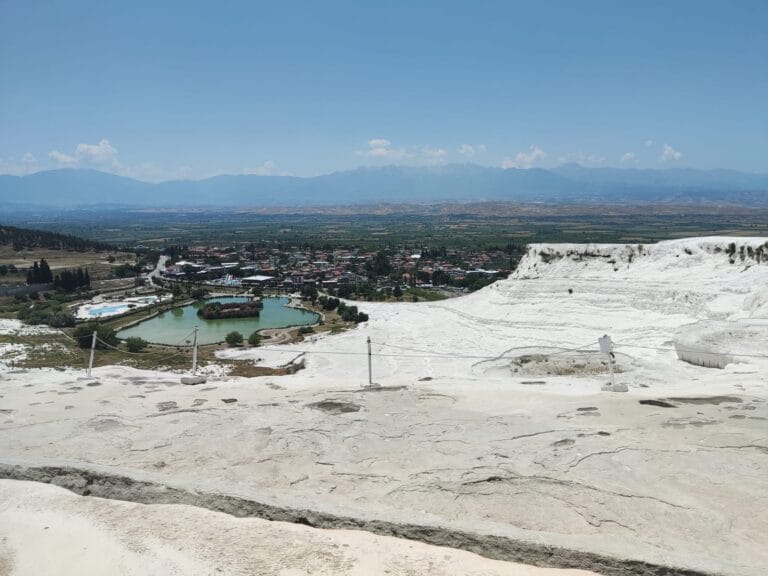
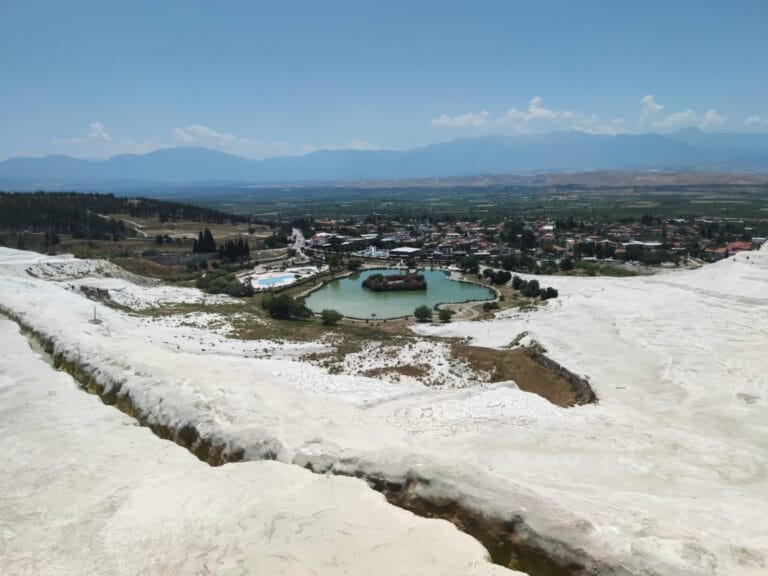
Pamukkale is one of the most extraordinary natural wonders in Turkey, famous for its white travertine terraces, thermal waters and ancient history. Located in southwestern Turkey near Denizli, Pamukkale attracts visitors from all over the world with its unique landscape that looks like a snow-covered hillside.
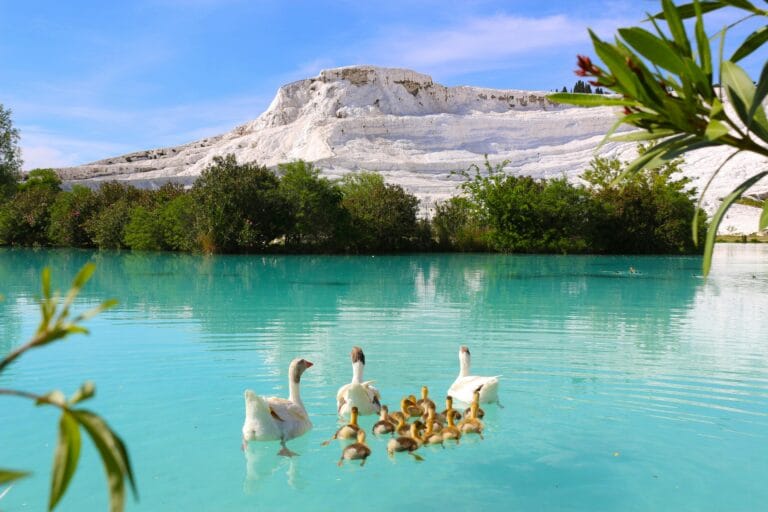
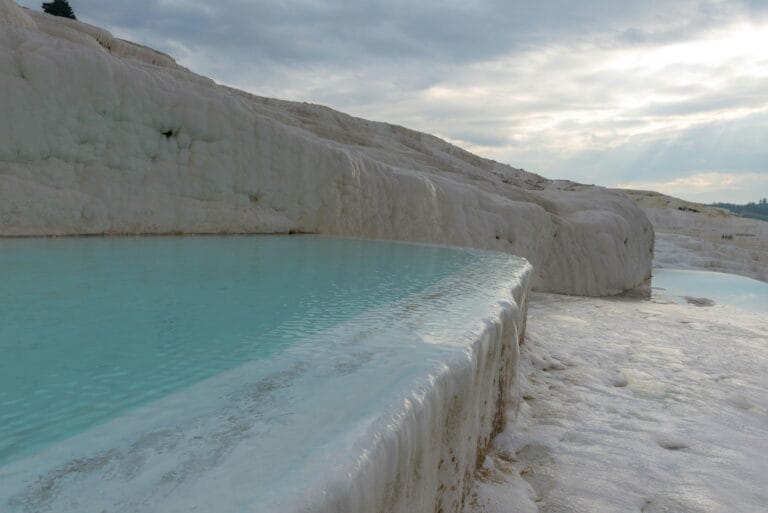
The name Pamukkale means “Cotton Castle” in Turkish, inspired by the bright white mineral formations created by calcium-rich thermal waters flowing down the hillside for thousands of years.
Visitors choose Pamukkale for thermal spa experiences, photography, wellness travel, ancient history and relaxing day trips from destinations such as Selcuk, Kusadasi, Izmir and Antalya.
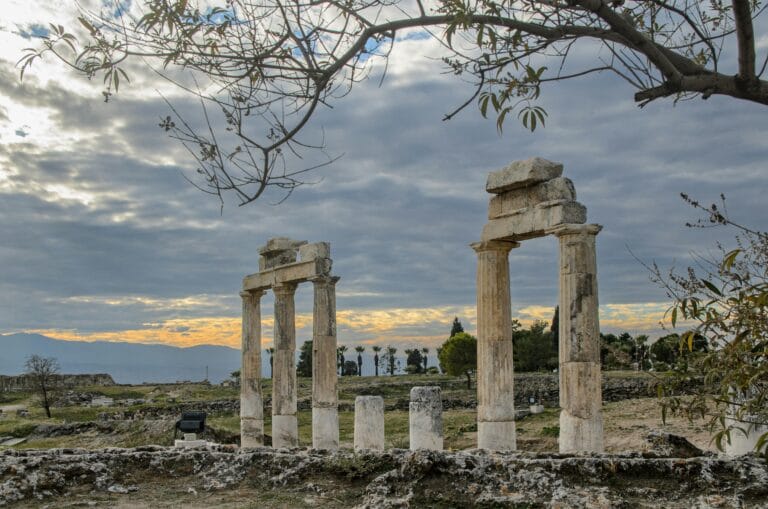
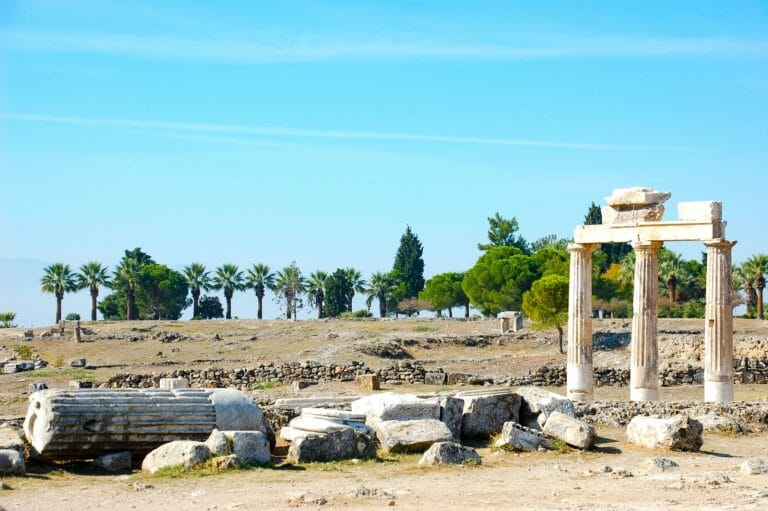
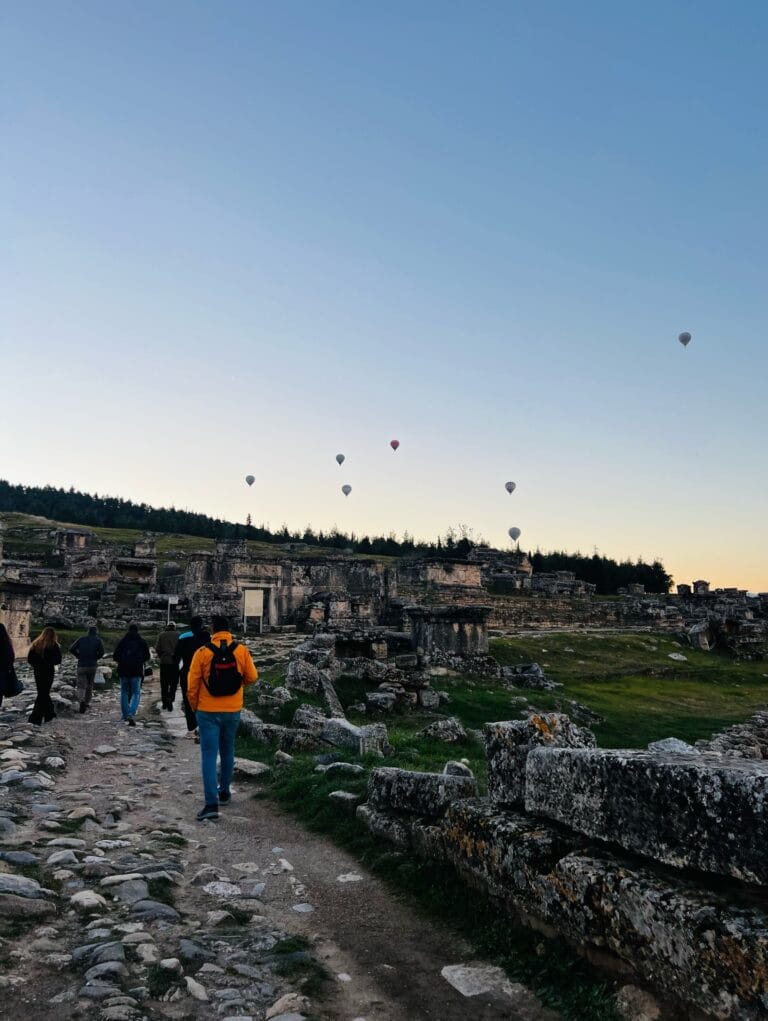
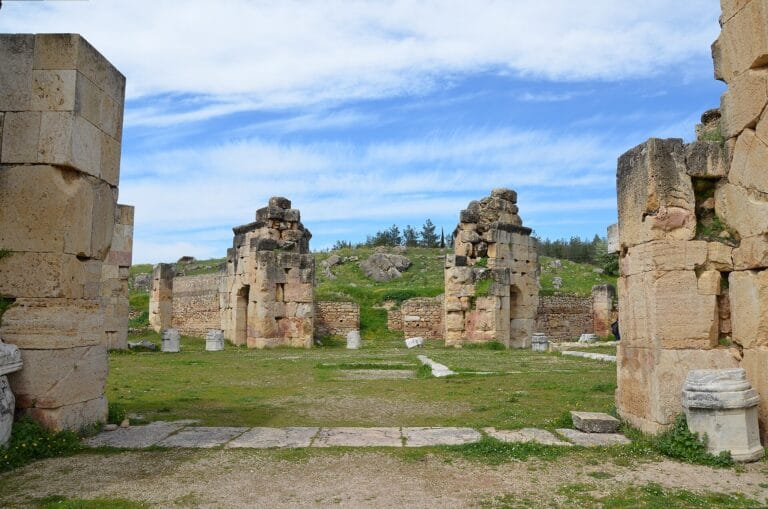
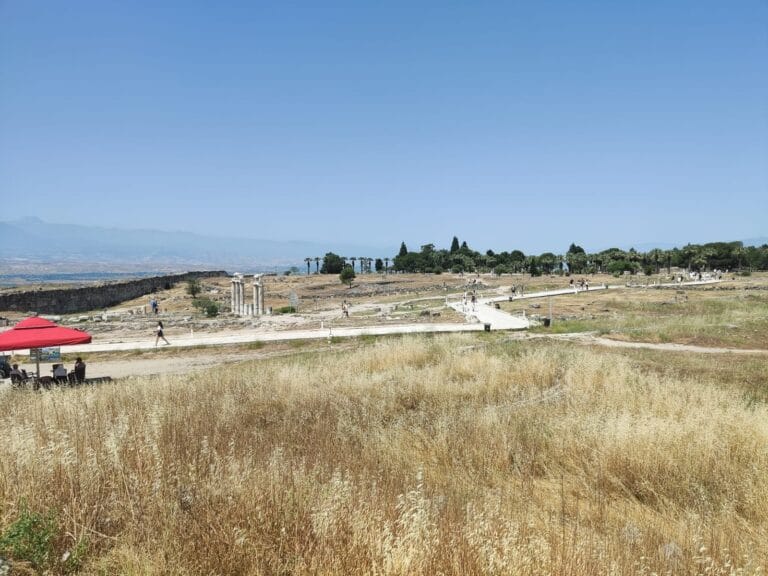
Pamukkale is also home to the ancient city of Hierapolis, a UNESCO World Heritage Site founded as a thermal healing center during the Hellenistic period and later expanded by the Romans. Today, visitors can walk among ancient ruins while enjoying one of the most unique landscapes in the world.
From walking barefoot on the travertines to swimming in thermal pools surrounded by Roman columns, Pamukkale offers an experience unlike anywhere else in Turkey.
For travelers seeking nature, history, relaxation and unforgettable scenery, Pamukkale is one of the best places to visit in Turkey.
Plan Your Visit
Best Time to Visit
All year
Nearest Airport
Denizli Cardak Airport (DNZ)
Popular Attractions
Pamukkale Travertines
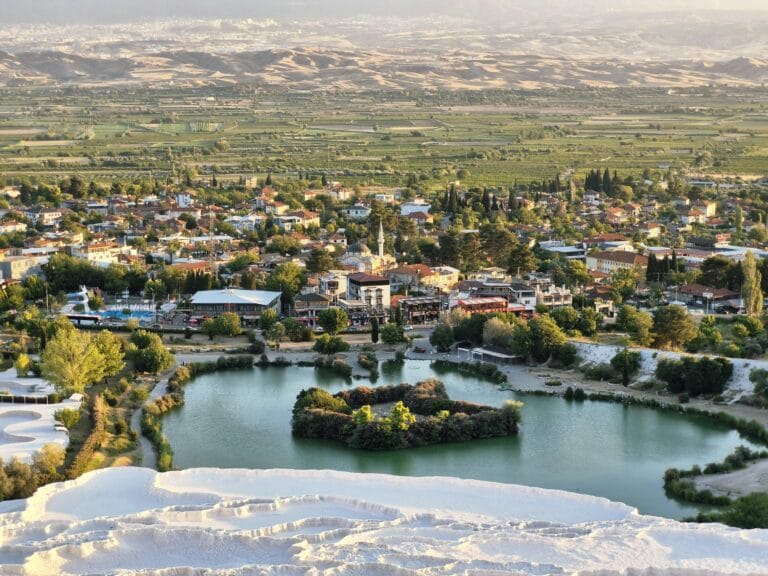
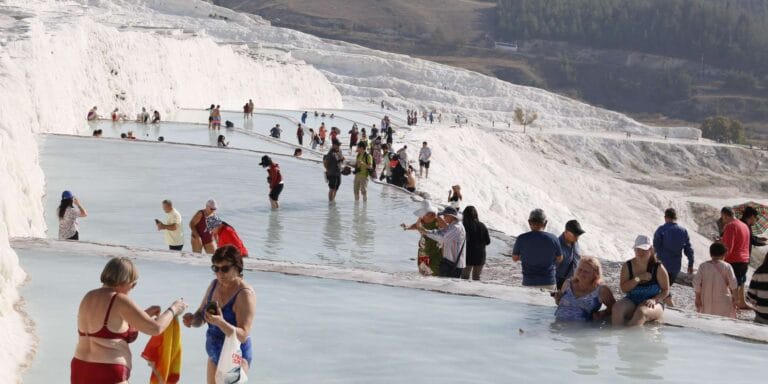
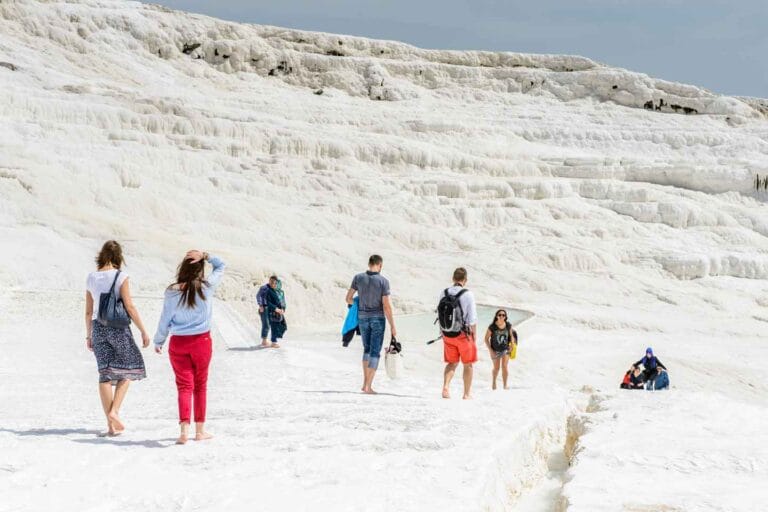
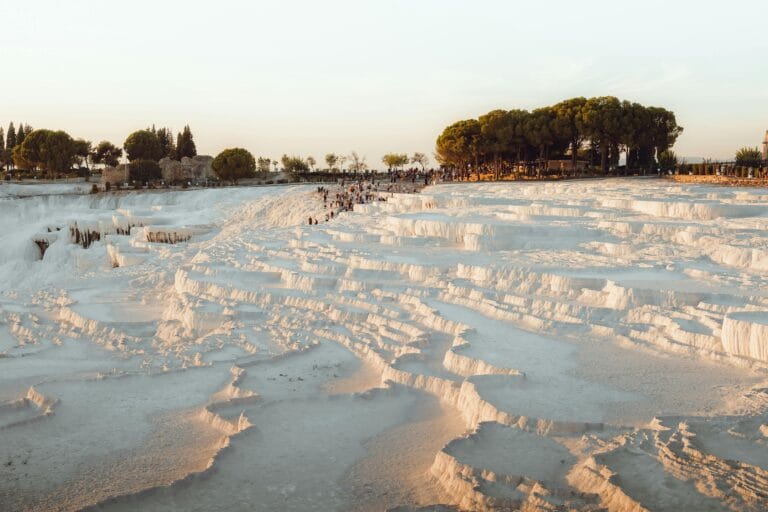
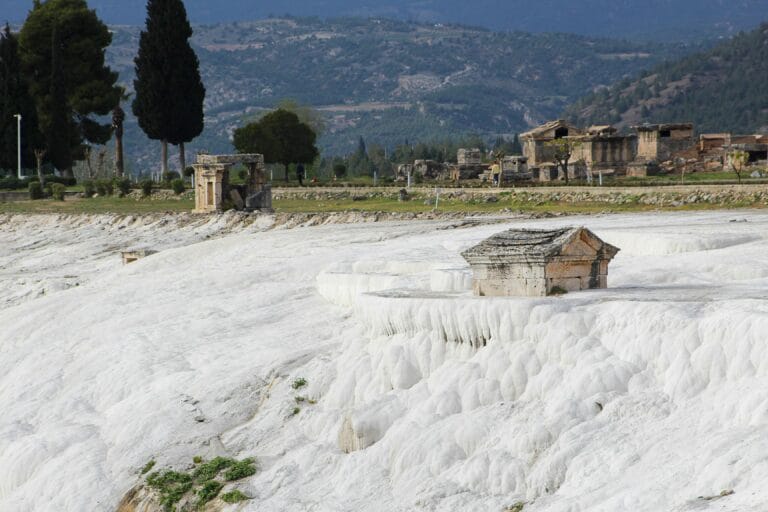
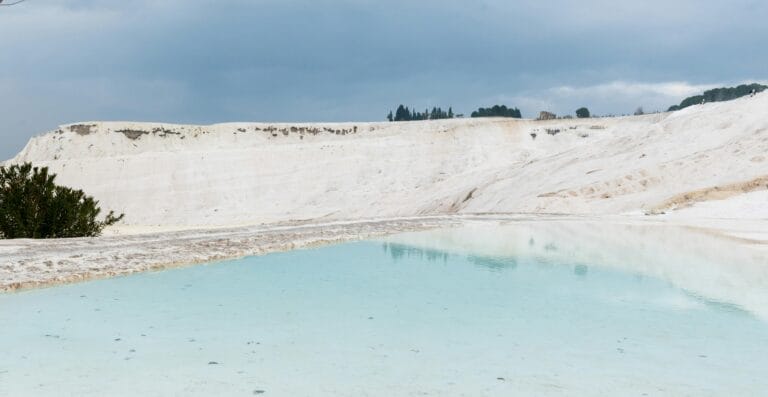
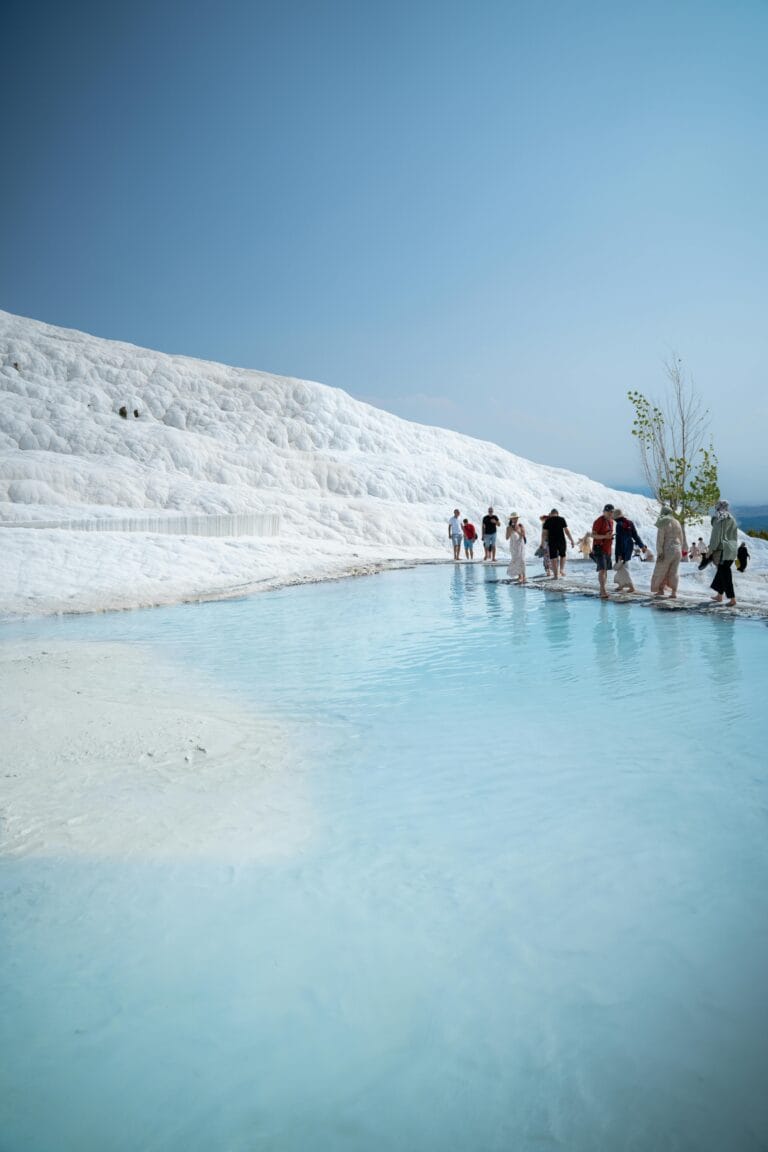
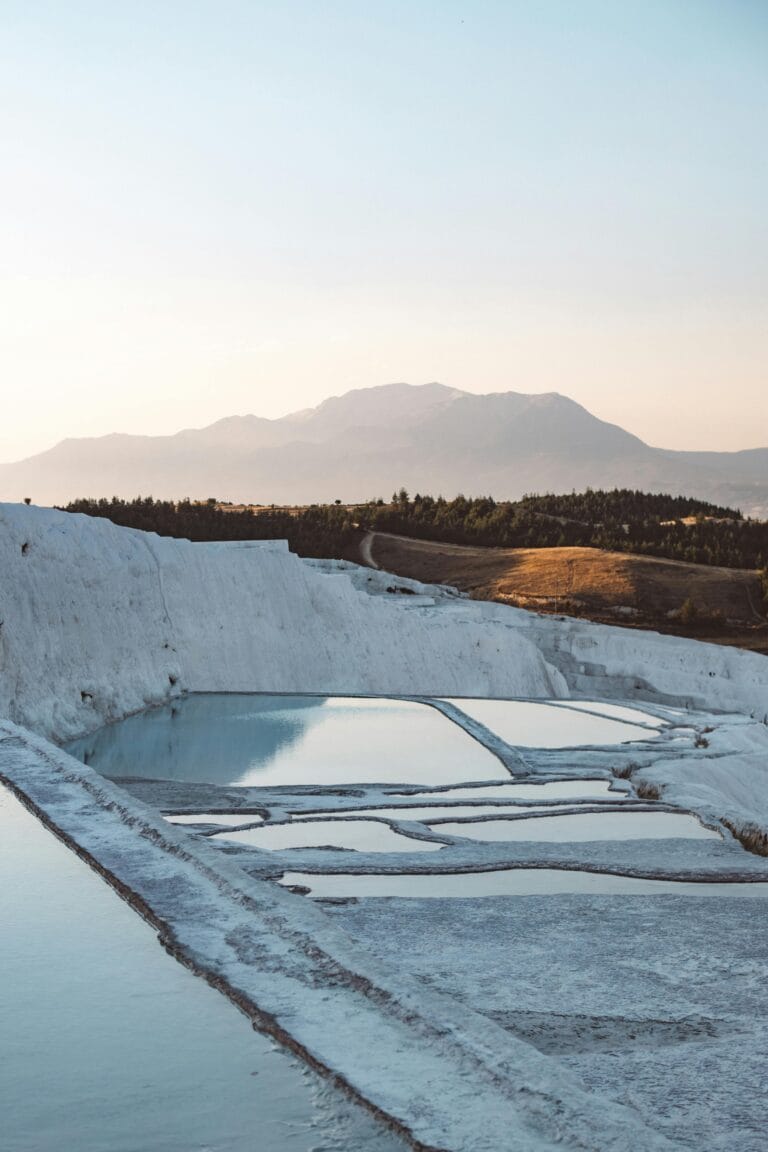
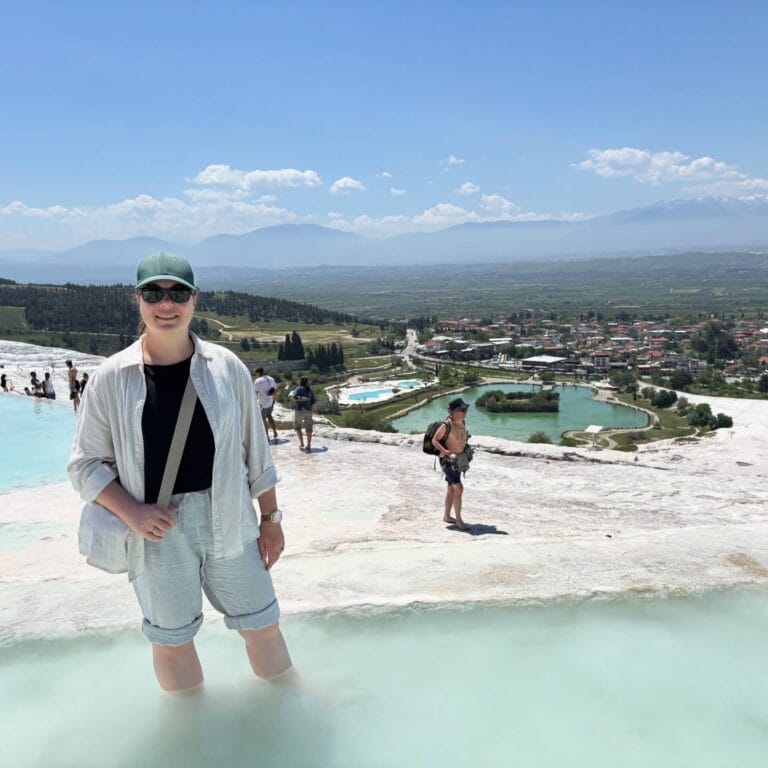
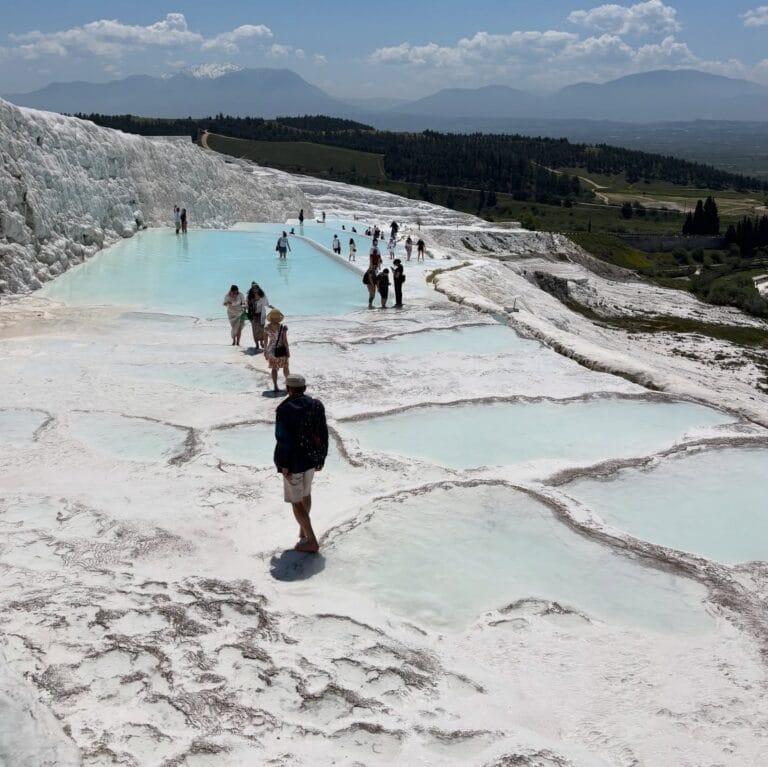
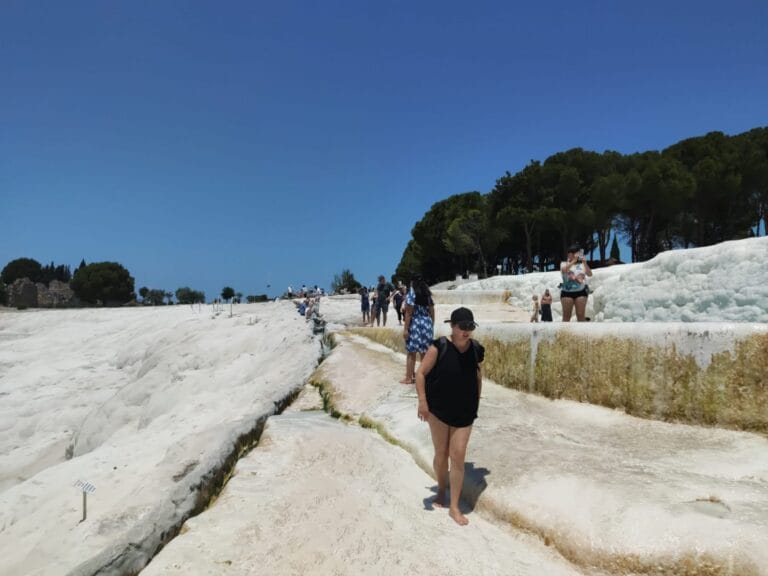
The famous white terraces of Pamukkale are formed by mineral-rich thermal waters flowing down the hillside. Visitors can walk barefoot across certain sections while enjoying panoramic views of the valley below. These natural pools are one of the most photographed landscapes in Turkey.
Hierapolis Ancient City
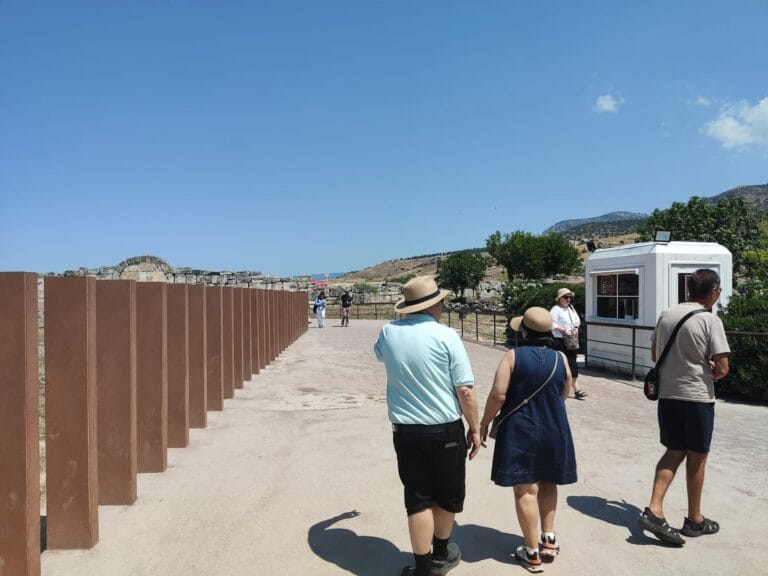
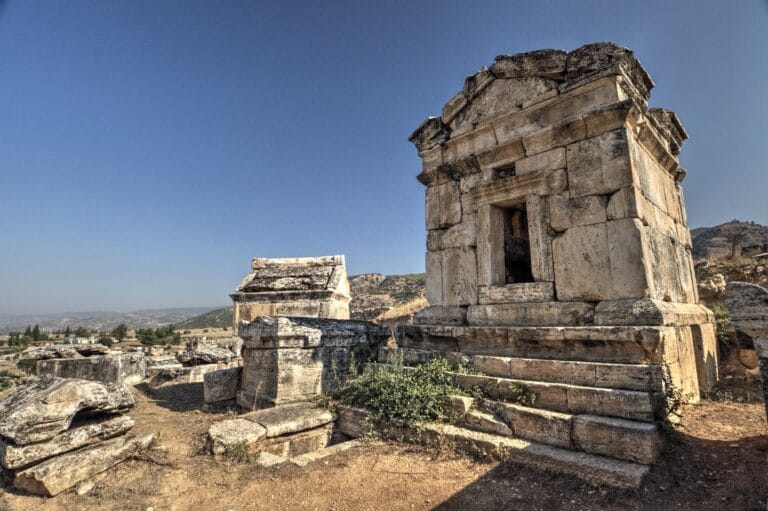
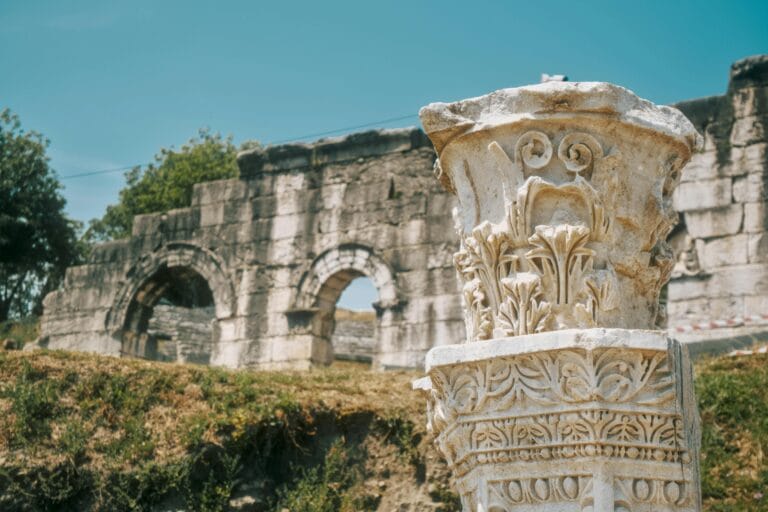
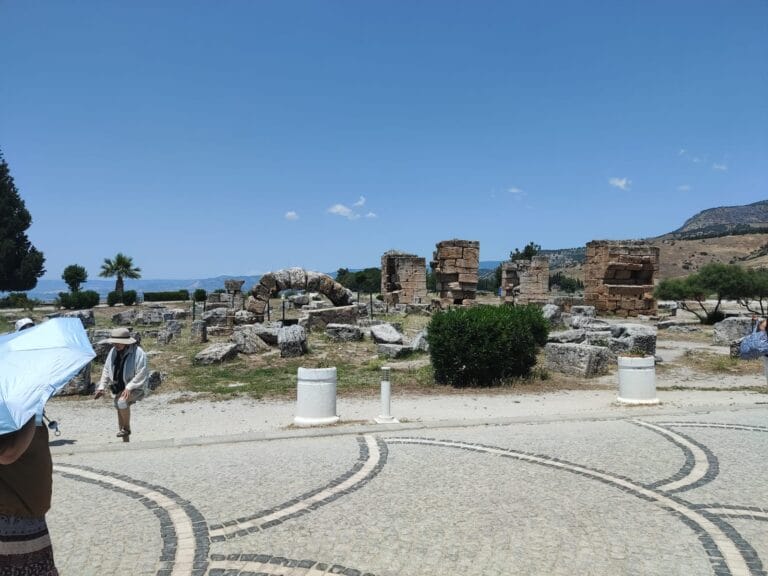
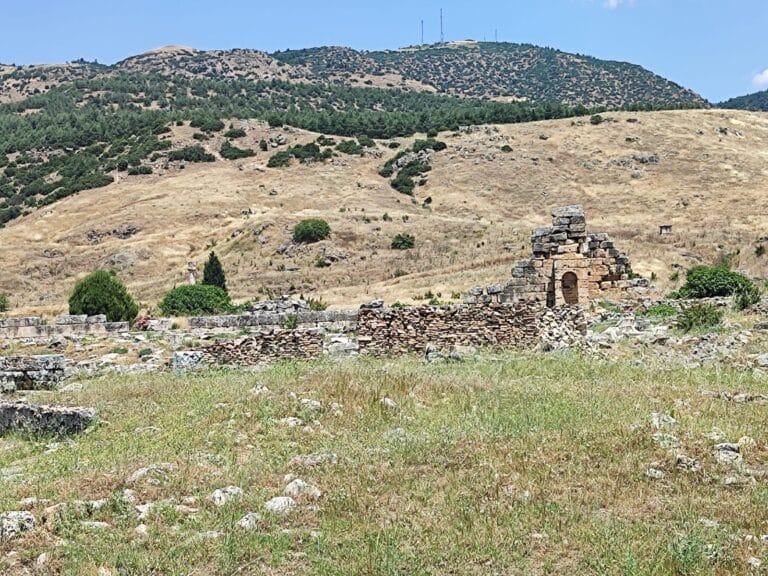
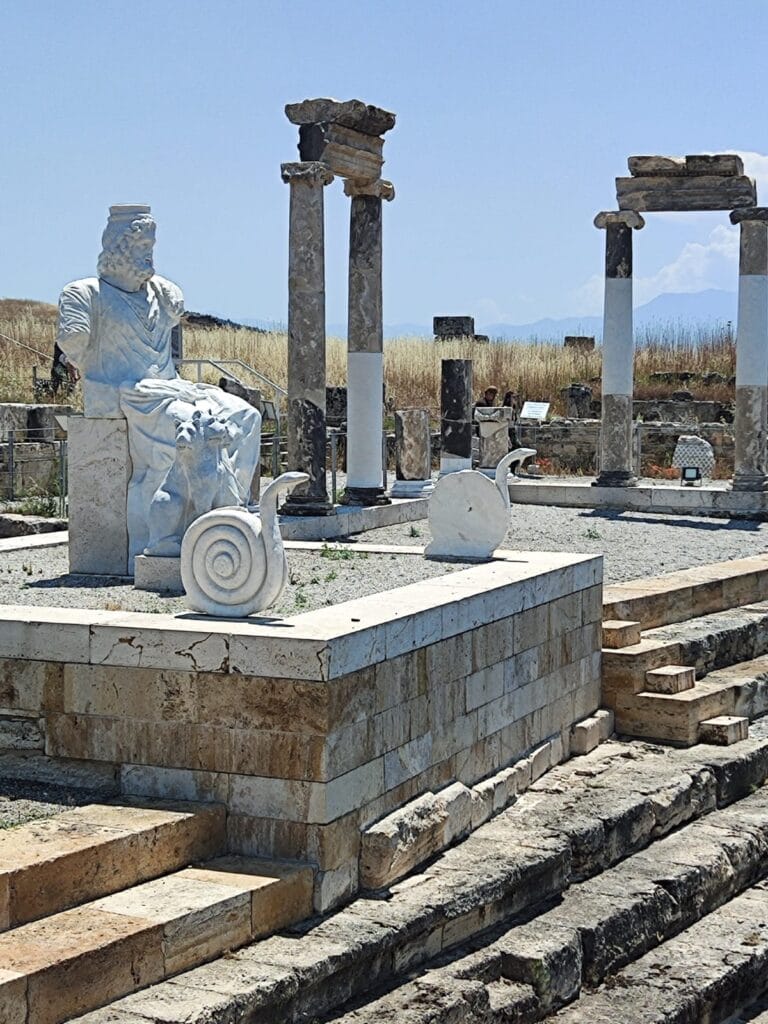
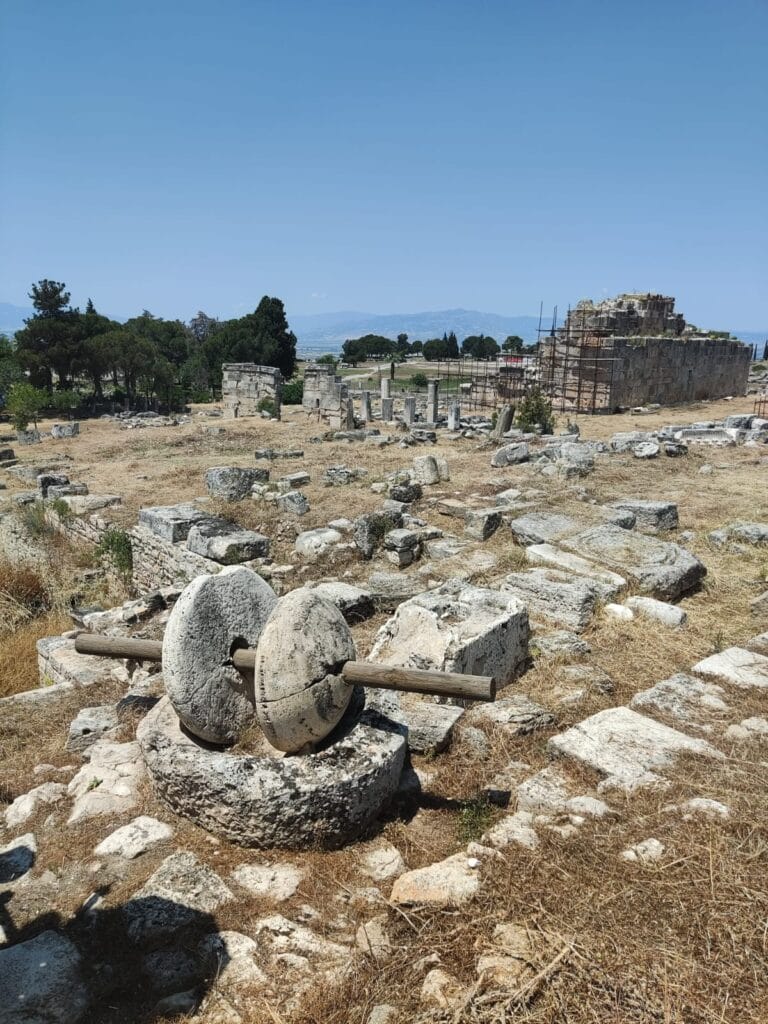
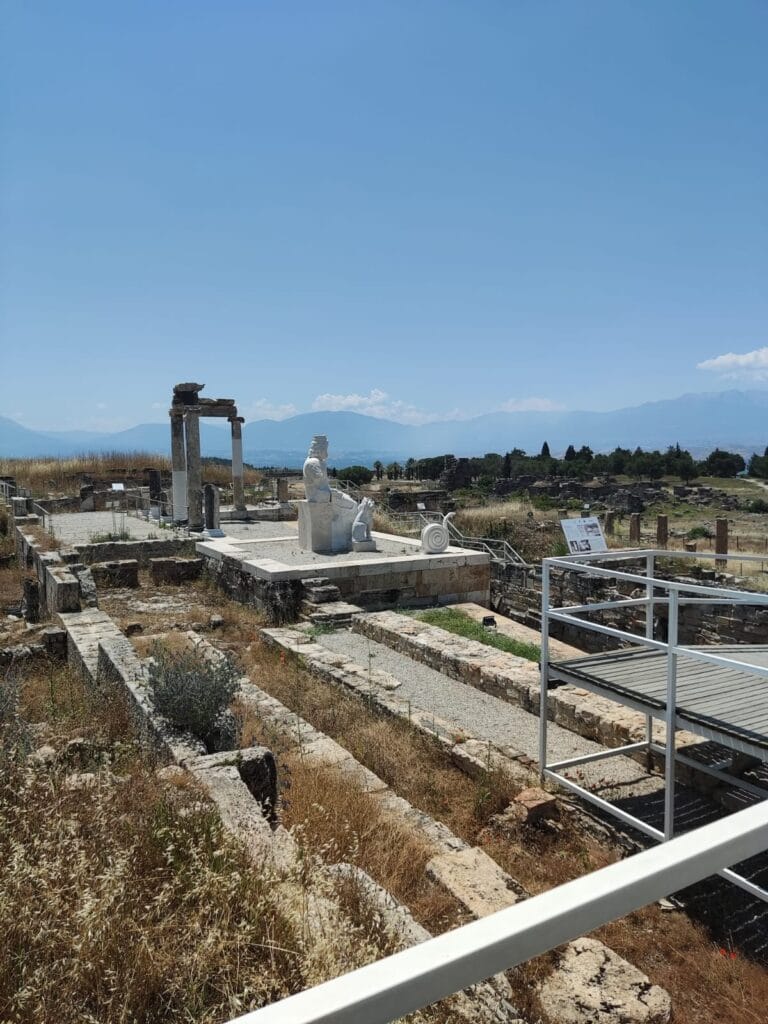
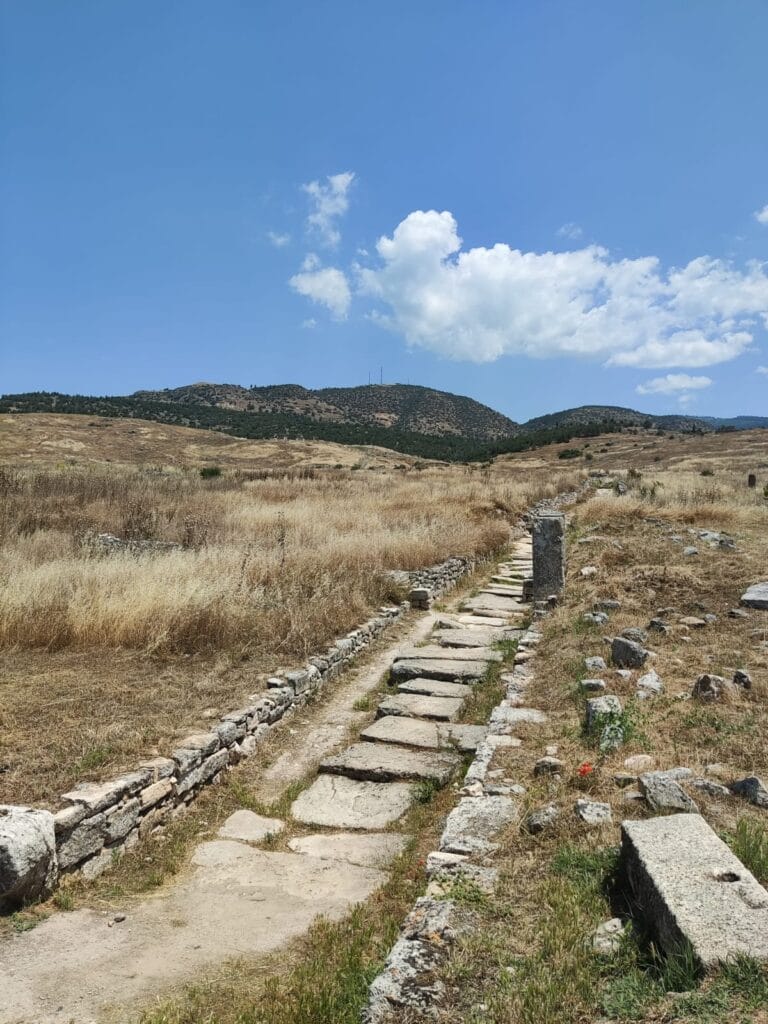
Built above the travertines, Hierapolis was an ancient Roman spa city famous for healing waters and religious significance. The site includes impressive ruins such as streets, gates, baths, temples and one of the largest ancient necropolises in Anatolia.
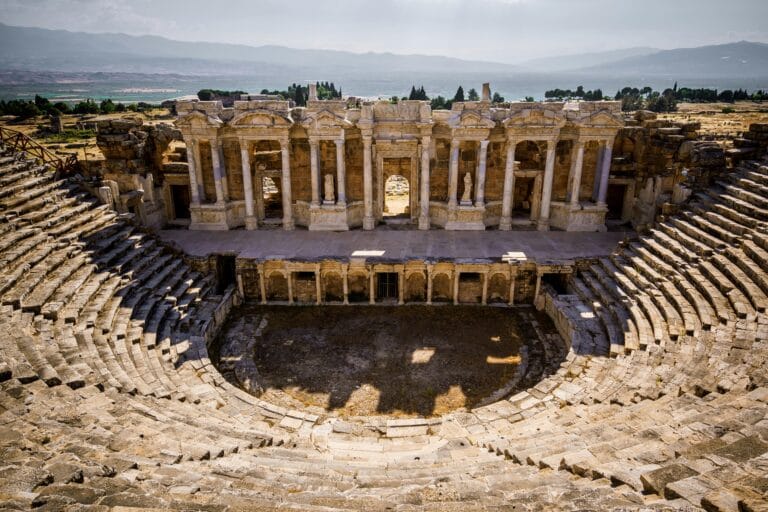
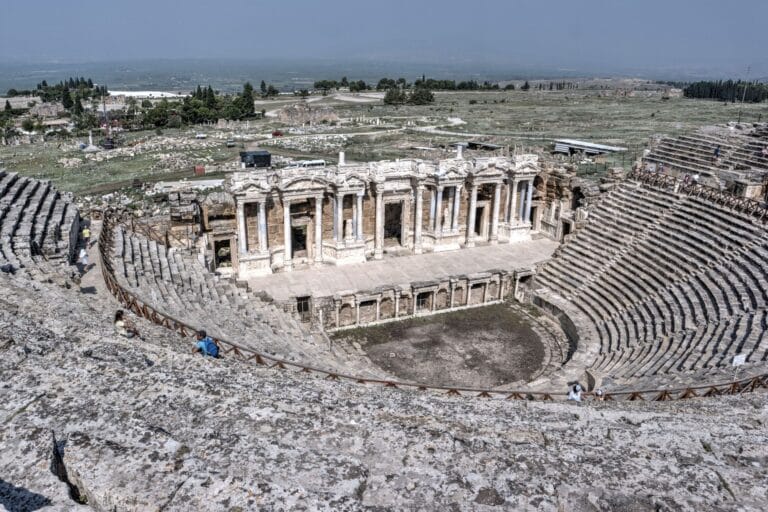
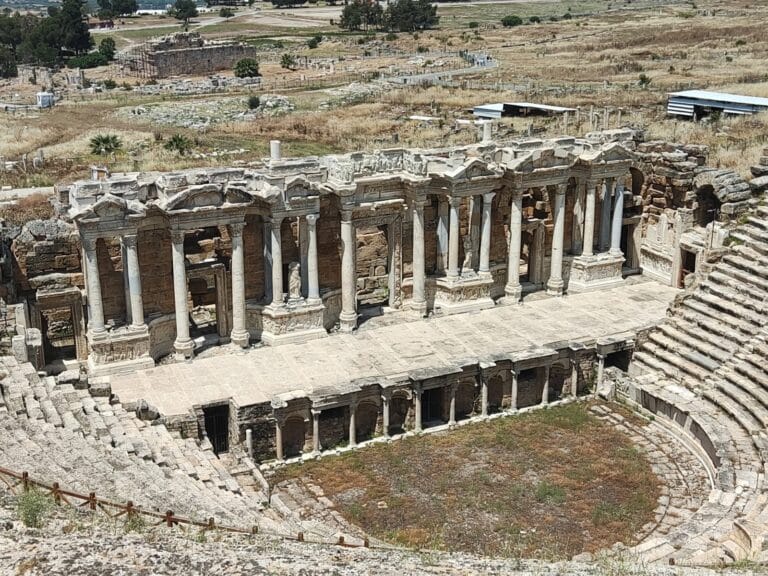
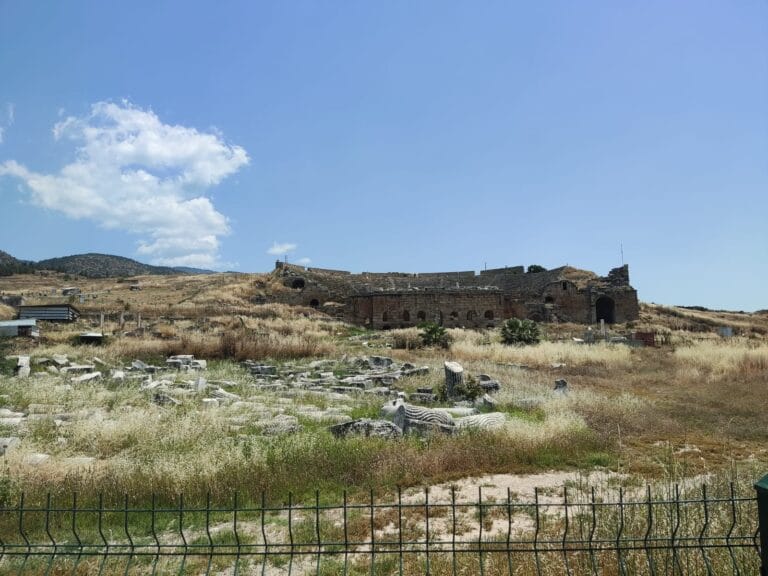
Ancient Theatre of Hierapolis
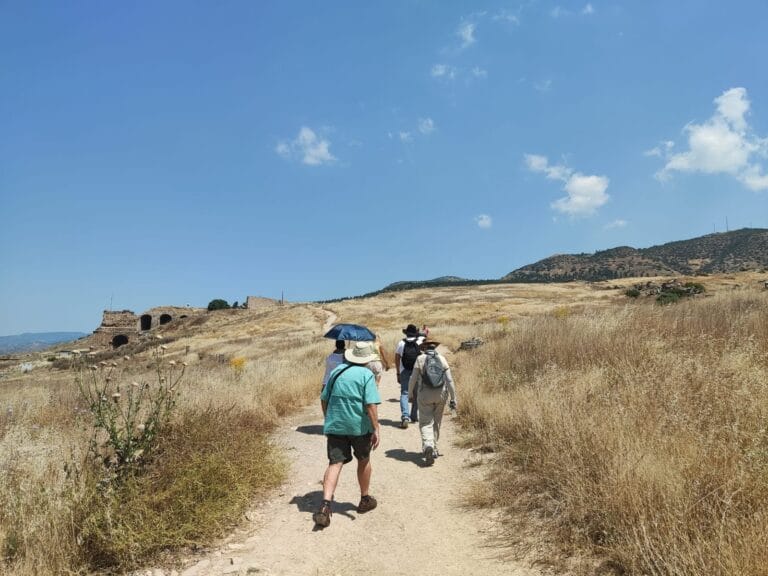
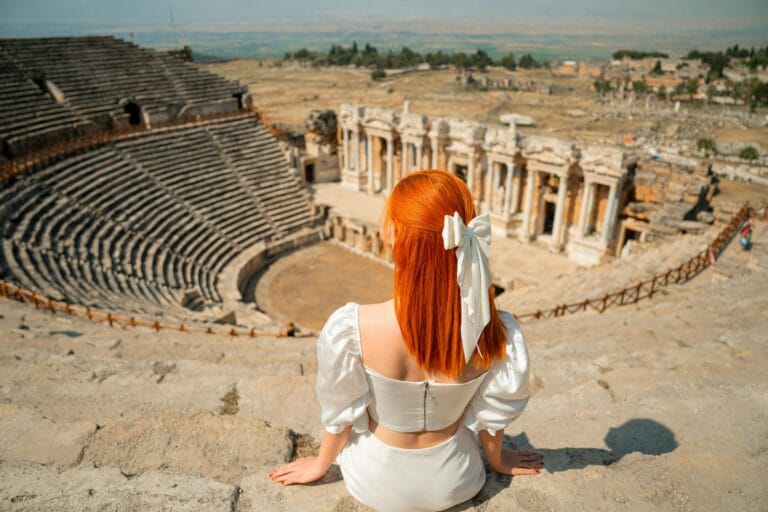
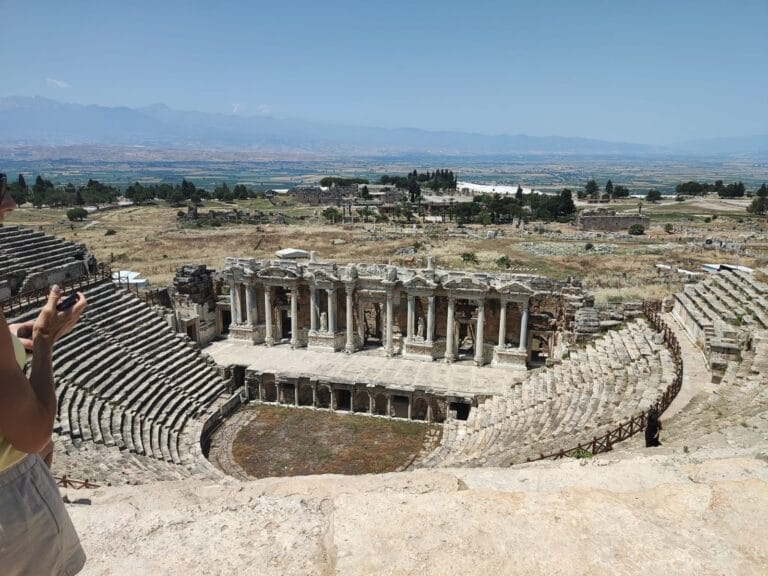
The theatre of Hierapolis is one of the best-preserved Roman theatres in Turkey. Built into the hillside, it once hosted thousands of spectators and still offers stunning views over the surrounding landscape.
Cleopatra Antique Pool
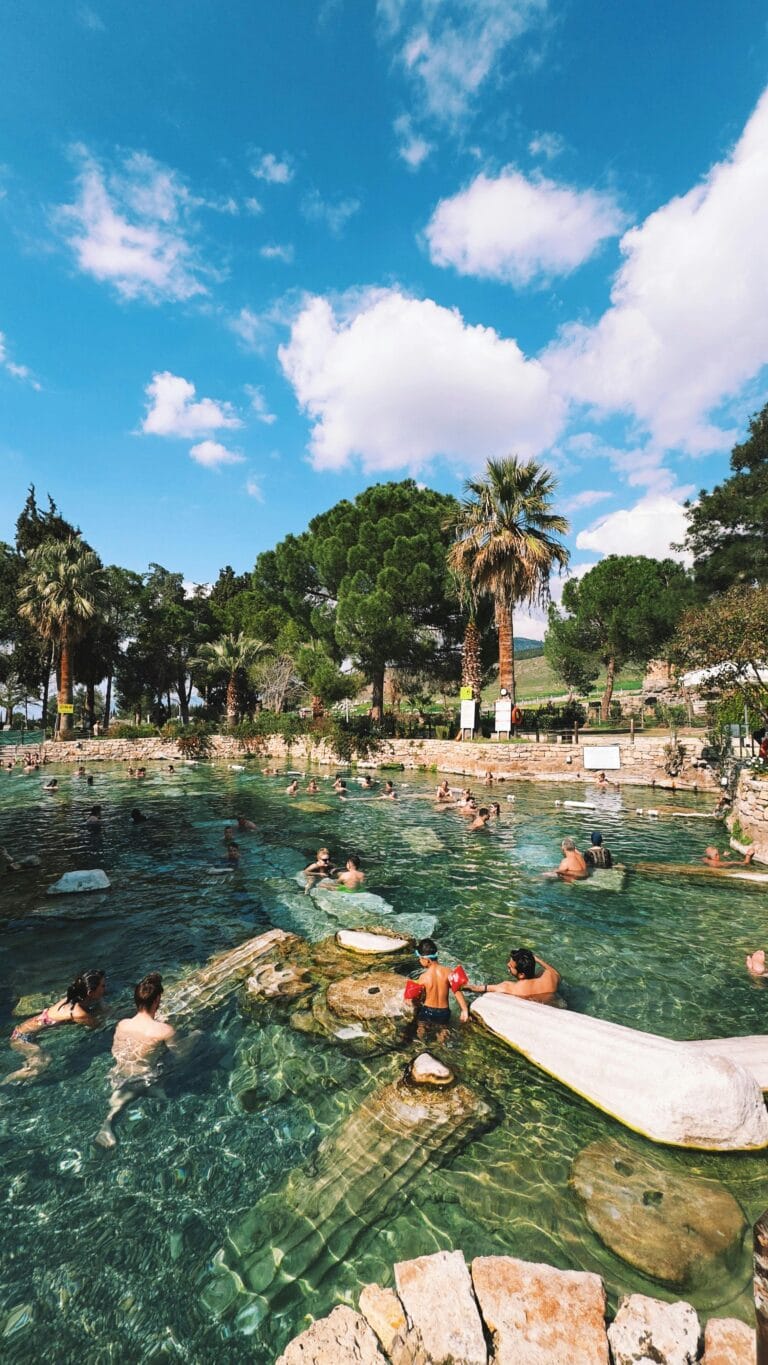
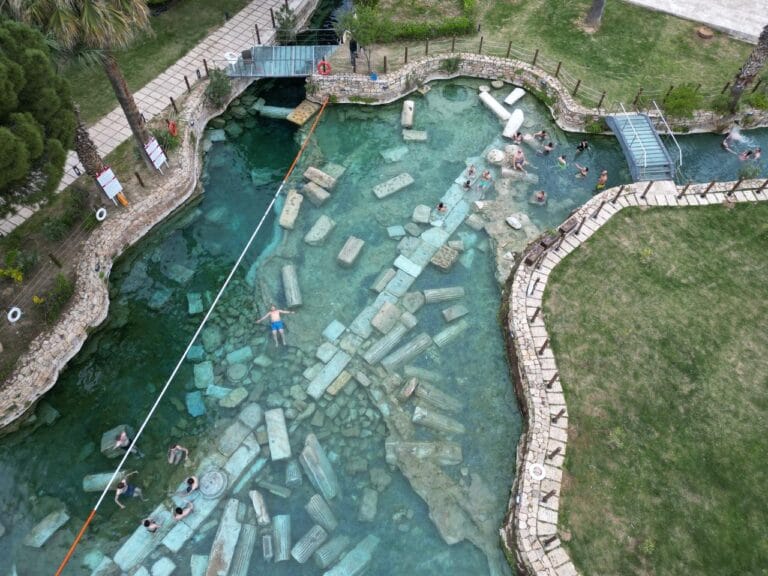
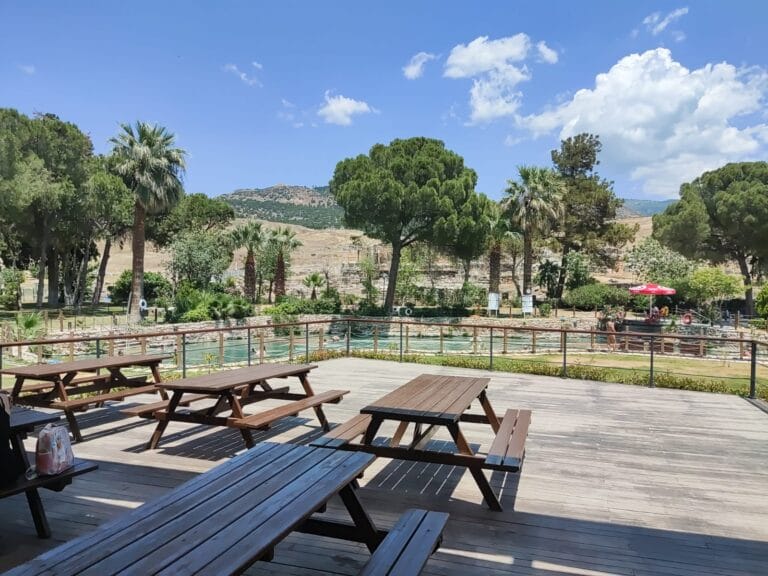
Also known as the Ancient Pool, this thermal pool allows visitors to swim among submerged Roman columns in naturally warm mineral water. According to local legends, Cleopatra herself once visited these healing waters.
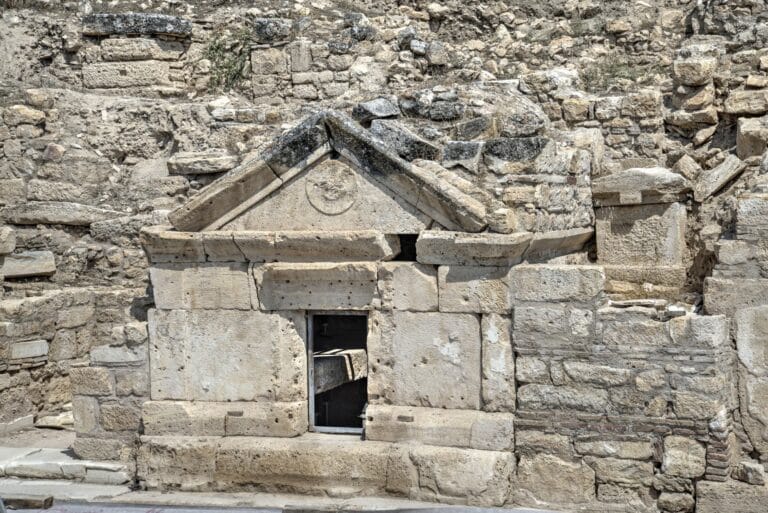
Necropolis of Hierapolis
The necropolis is one of the largest ancient cemeteries in Turkey, stretching for nearly two kilometers. It contains hundreds of tombs, sarcophagi and burial monuments from different periods of ancient history.
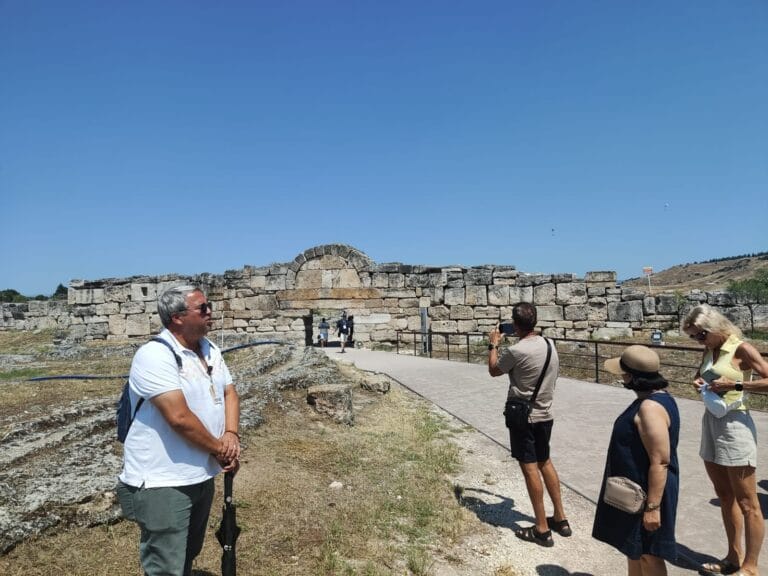
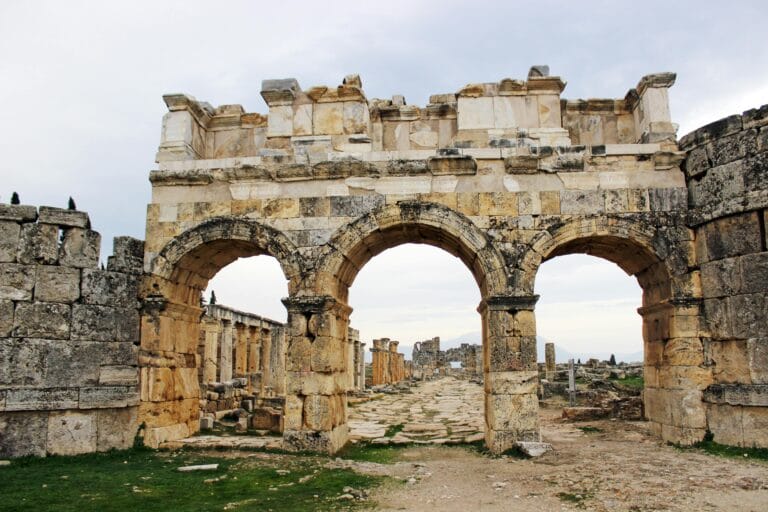
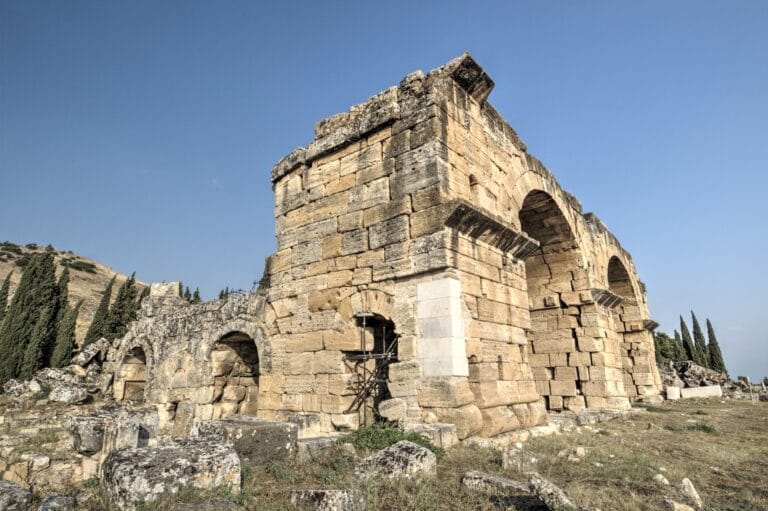
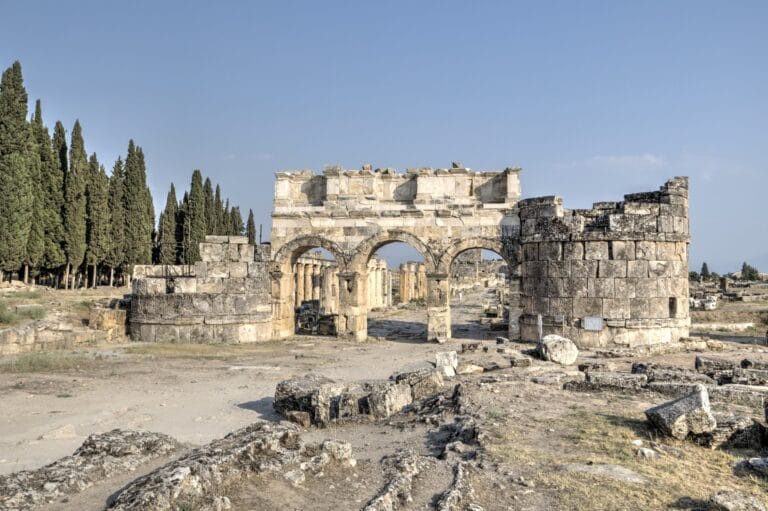
Frontinus Gate
This monumental Roman gateway once marked the main entrance to Hierapolis. It still stands as one of the most impressive architectural remains in the ancient city.
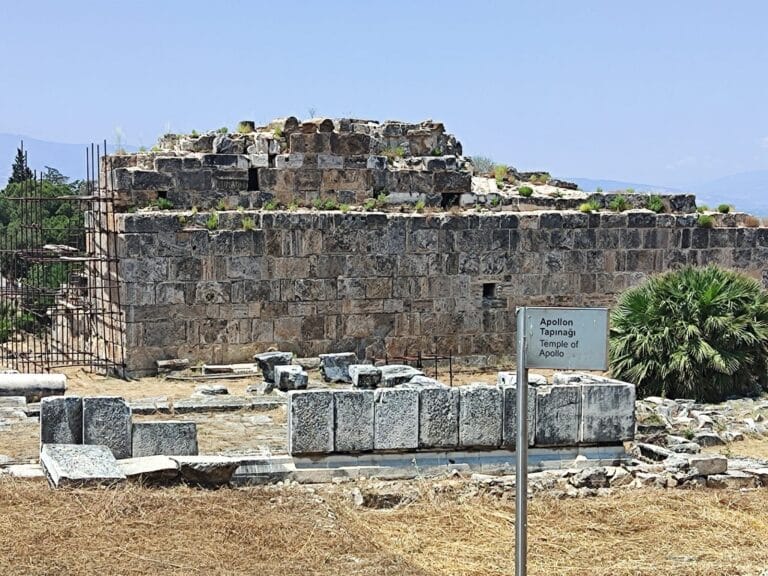
Temple of Apollo
Dedicated to Apollo, the god associated with prophecy and healing, this temple was one of the religious centers of Hierapolis and was built near sacred underground thermal sources.
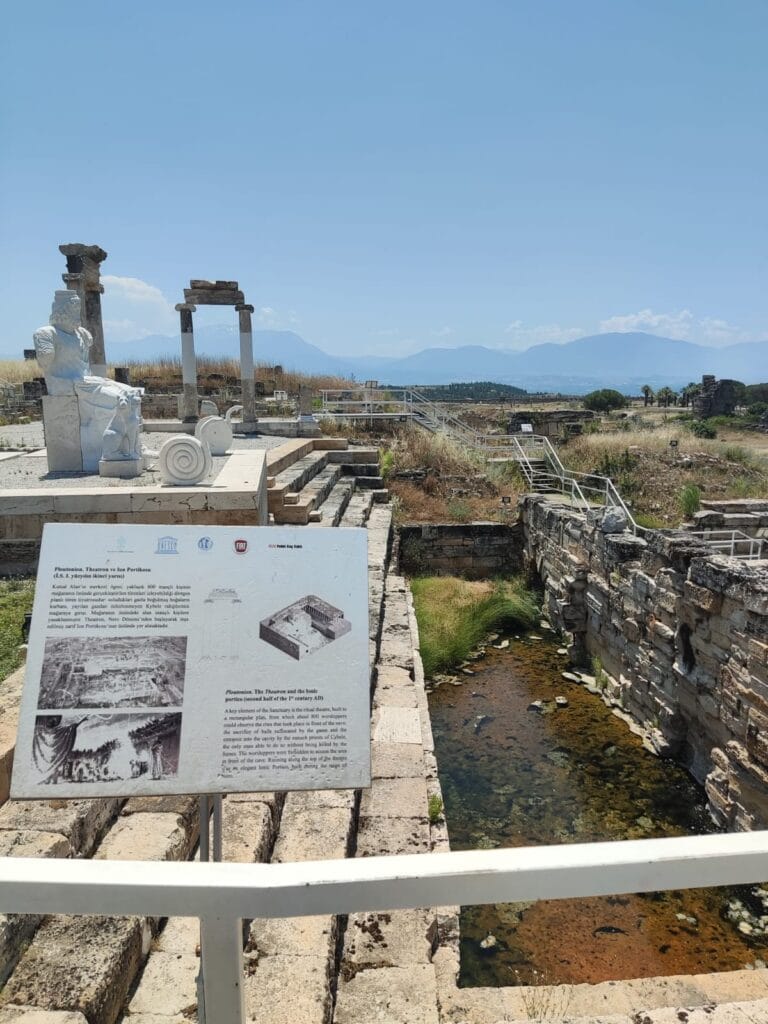
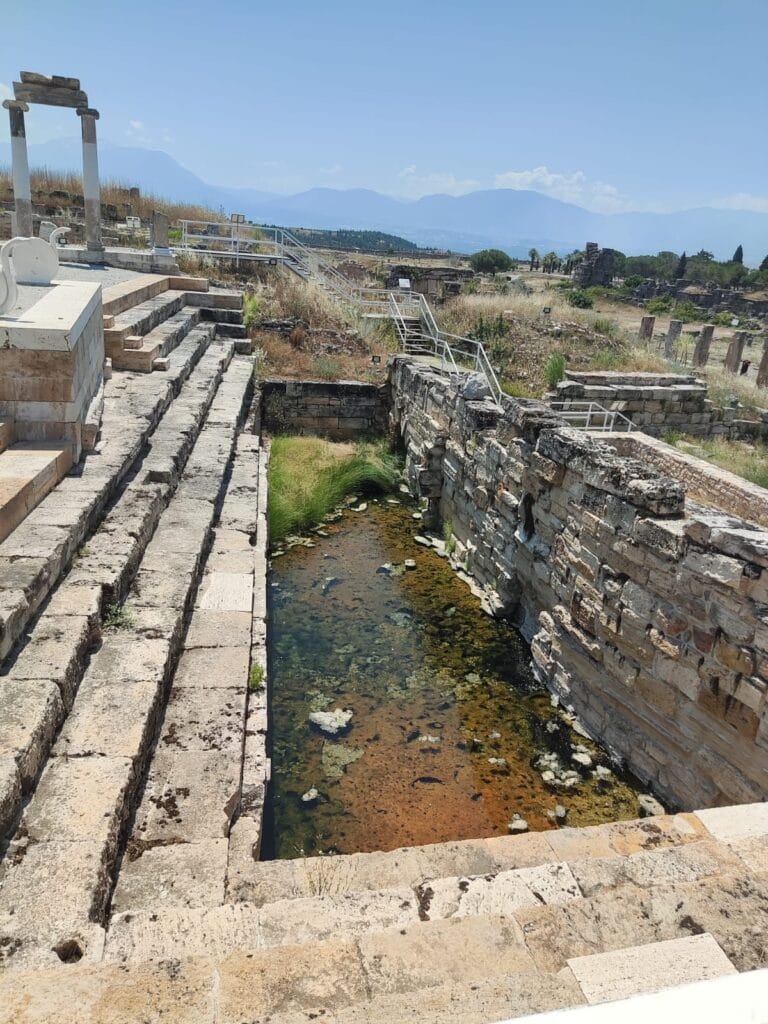
Plutonium
The Plutonium was a sacred cave believed by ancient people to be an entrance to the underworld. Toxic gases emerging from the cave created mystical rituals connected to the cult of Pluto.
Laodicea Ancient City
Located near it, Laodicea was one of the wealthiest cities of Roman Anatolia and one of the Seven Churches of Revelation mentioned in the Bible. It is often visited together with Pamukkale.
Kaklik Cave
Often called the “Underground Pamukkale,” Kaklik Cave features white mineral formations, thermal water and small travertines hidden inside a cave system near Denizli.
Here is a destination where nature and ancient history come together in a truly unique way. Whether you spend your day walking across the white terraces, exploring the ruins of Hierapolis, relaxing in thermal waters or discovering nearby ancient cities, Pamukkale offers one of the most unforgettable travel experiences in Turkey.
Gallery