Temple of Artemis (Artemision) in Ephesus | History, Architecture & Legacy
Temple of Artemis (Artemision) in Ephesus
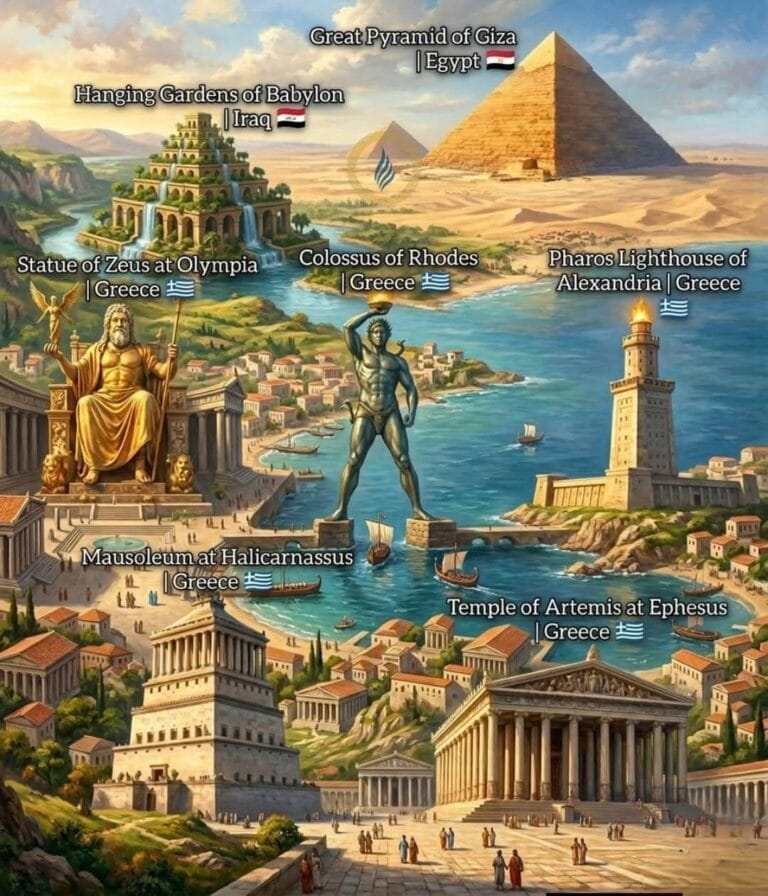
The Temple of Artemis also known as the Artemision of Ephesus was one of the most magnificent religious monuments of the ancient world. Located near present-day Selcuk and the ancient city of Ephesus, the temple was dedicated to Artemis Ephesia, the uniqque Ephesian form of the goddess Artemis. In antiquity, it was celebrated as one of the famous Seven Wonders of the Ancient World and attracted pilgrims, merchants, rulers and travelers from across the Mediterranean.
Although only a few remains survive today, the Temple of Artemis continues to symbolise the spiritual, artistic and cultural importance of ancient Ephesus.
The Origins of Artemis Ephesia
The roots of Artemis Ephesia go far beyond the classical Greek world. Scholars believe the Ephesian Artemis evolved from much older Anatolian mother goddess traditions associated with fertility, nature, protection and abundance.
Throughout Anatolia, this powerful mother goddess appeared under different names in different civilizations.
- ”Ma” among the Sumerians
- ”Kupapa” and ”Hepa” among Anatolian cultures
- ”Arinna” among the Hittites
- ”Kybele” in Phrygia and Lydia
- ”Rhea” in Crete
- ”Isis” in Egypt
Over centuries, these traditions merged with the Greek worship of Artemis, creating the distinctive identity of Artemis Ephesia. Unlike the Greek huntress Artemis, the Ephesian Artemis represented fertility, prosperity and cosmic protection.
Archaeological evidence suggests that worship in this sacred area may date back as early as 2000 BC.
The Construction of the Temple
The most famous version of the Temple of Artemis was constructed during the 6th century BC, when Ephesus was experiencing its golden age under the rule of the Lydian Kingdom.
The citizens of Ephesus entrusted the construction of the temple to the architects Chersiphon and his son Metagenes from Knossos. The famous architect Theodoros of Samos also contributed to the project.
Because the area surrounding the temple was marshy and unstable, engineers developed innovative techniques to strengthen the foundations. Ancient sources describe how layers of charcoal and compacted materials were placed beneath the structure to stabilize the soft ground.
Built entirely from marble, the Artemision became one of the largest temples of the ancient world.
According to the Roman writer Pliny the Elder, the temple measured approximately 115 meters long and 55 meters wide and contained 127 ionic columns which is many standing around 18 meters high.
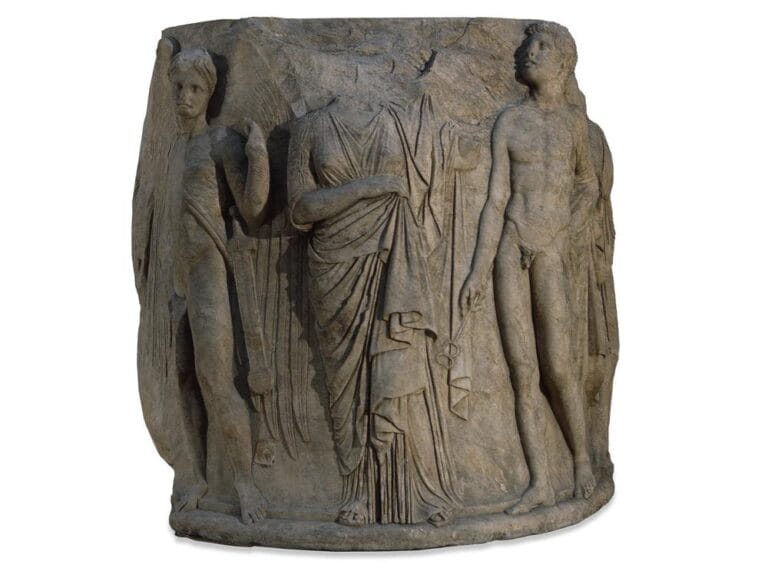
Some of the columns were decorated with elaborate relief sculptures known as Columnae Caelatae.
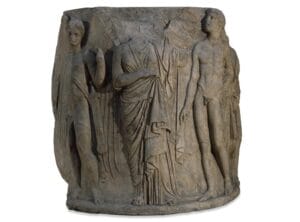
The columna cealata from the Temple of Artemis at Ephesos is on display at the British Museum today.
In Anatolia, these can also bee seen on the columns of two temples. One of these temples is the Ephesus Artemis Temple. The columna caelata found in the archaic-period Artemis Temple were commissioned by the Lydian king Croesus.
Architecture of the Artemision
The Temple of Artemis represented one of the greatest achievements of Ionic architecture.
The temple stood on a monumental stepped platform and was surrounded by rows of elegant Ionic columns. Its enormous scale, symmetrical design and rich sculptural decoration impressed ancient visitors for centuries.
At the center of the sacred complex stood the cult statue of Artemis Ephesia. In front of the temple was a large altar where ceremonies and sacrifices took place.
Ancient writers described the Artemision not only as a religious center but also a place of political gathering, commerce and cultural exchange.
The temple’s design later influenced many other sanctuaries across the ancient Greek and Roman world.
The Burning of the Temple
One of the most dramatic monuments in the history of the Artemision occured in 356 BC.
A man named Herostratus intentionally set fire to the temple in an attempt to immortalize h,s name in history. Ancient historians recorded that the fire spread rapidly through the wooden roof structure, eventually destroying much of the temple.
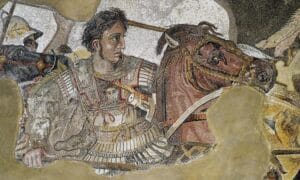
According the tradition, the destruction happened on the same night Alexander the Great was born. The historian Hegesias of Magnesia is often credited with the witty, yet symbolic observation that the goddess Artemis was absent from her temple because she was busy attending the birth of Alexander in Pella. Alexander the Great was born in July 356 BC.
Alexander the Great and the Temple
Ancient geographer Strabo recounts that Alexander the Great offered to finance the reconstruction of the Temple of Artemis after its destruction.
However; the Ephesians famously desclined the offer reportedly saying:
It is not fitting for one god to build a temple for another.
This story became one of the most famous anectodes connected to the history of Ephesus.
Sculptures and Artistic Decorations
The Artemision was not only an architectural masterpiece but also an important center of ancient sculpture and art.
Decorated relief columns, monumental statues and ceremonial sculptures adorned the sanctuary. Some fragments discovered during excavations are now displayed in museums, including the British Museum and the Ephesus Museum in Selcuk.
One remarkable relief depicts the mythological story of Alkestis who sacrificed herself to save her husband.
A marble horse sculpture believed to have belonged to a four horse chariot decoration from the temple is also exhibited in the Ephesus Museum today.
The Temple and the Changing Landscape
When the Temple of Artemis was first constructed, it stood close to the ancient coastline.
Over centuries, however, the nearby Kaistros River (today’s Kucuk Menderes river) filled the harbor area with sediment and alluvial soil. As a result, the coastline moved farther westi leaving the temple several kilometers inland.
This same natural process also contributed to the gradual decline of Ephesus as an important harbor city.
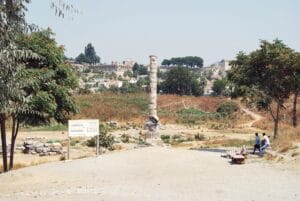
Today, the Temple of Artemis lies approximately 5 kilometers away from the modern coastline.
Excavations and Archaeological Discoveries
Excavations at the Artemision site revealed evidence of multiple construction phases dating across many centuries.
Archaeologists discovered pottery fragments, architectural remains, sculptural pieces and traces of earlier sanctuaries beneath the later temple structures.
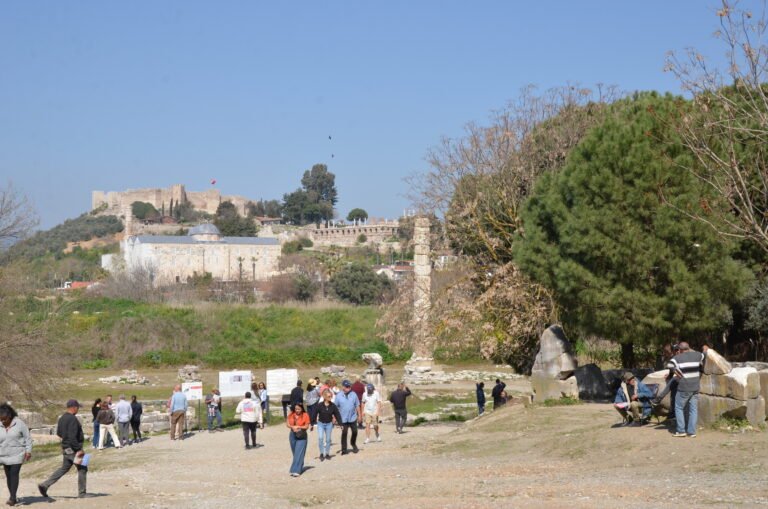
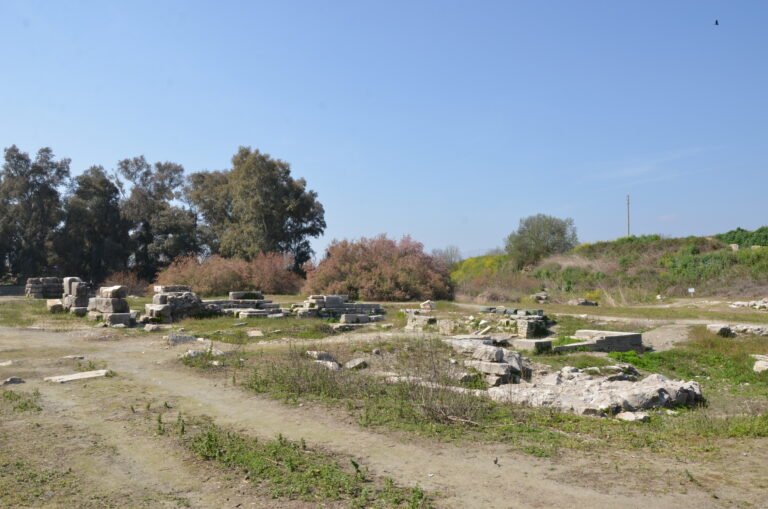
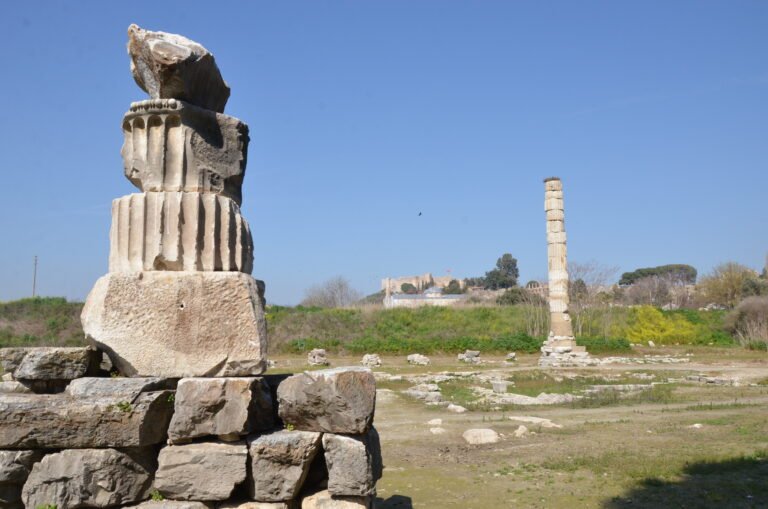
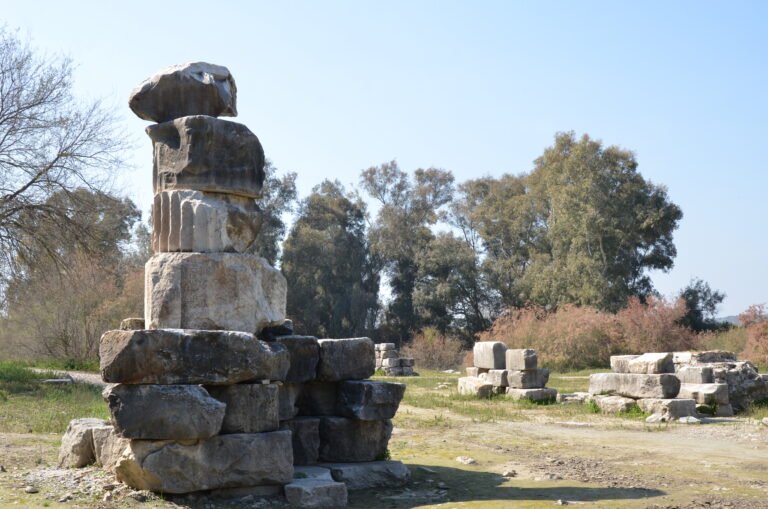
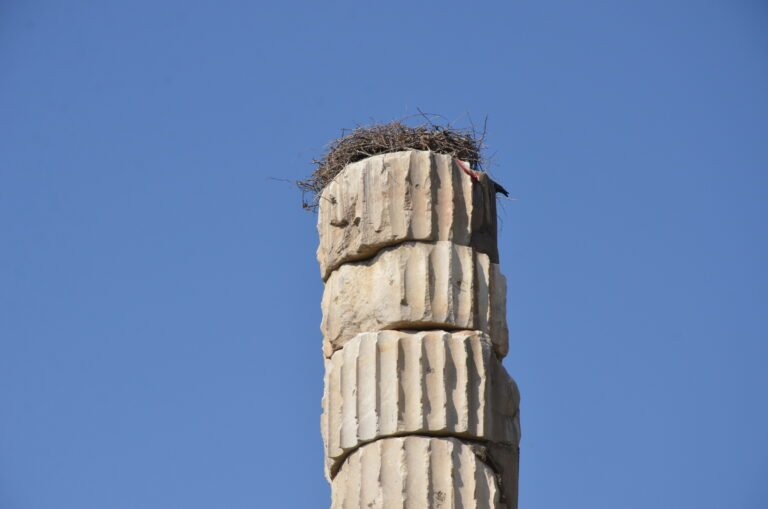
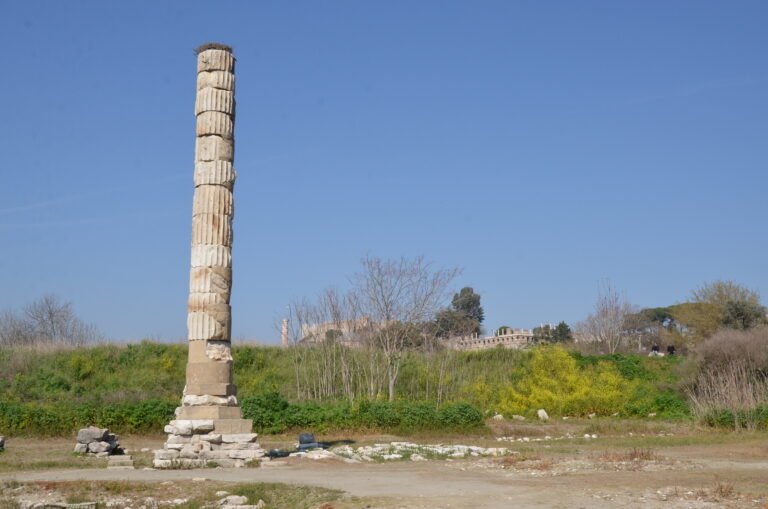
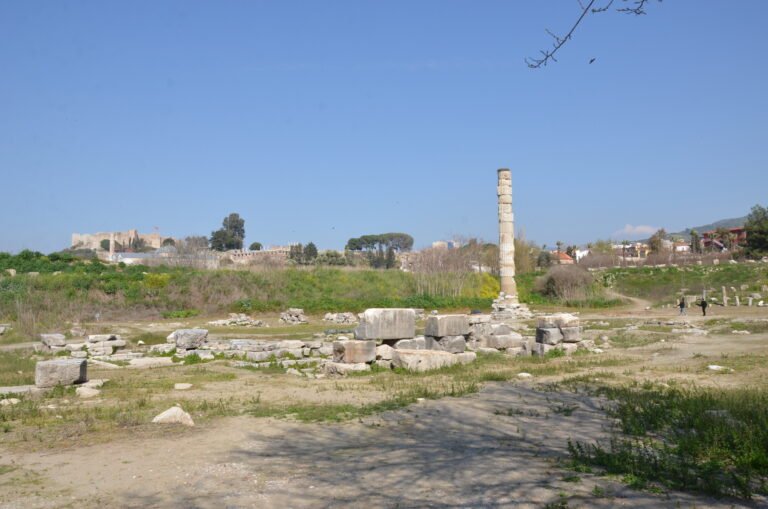
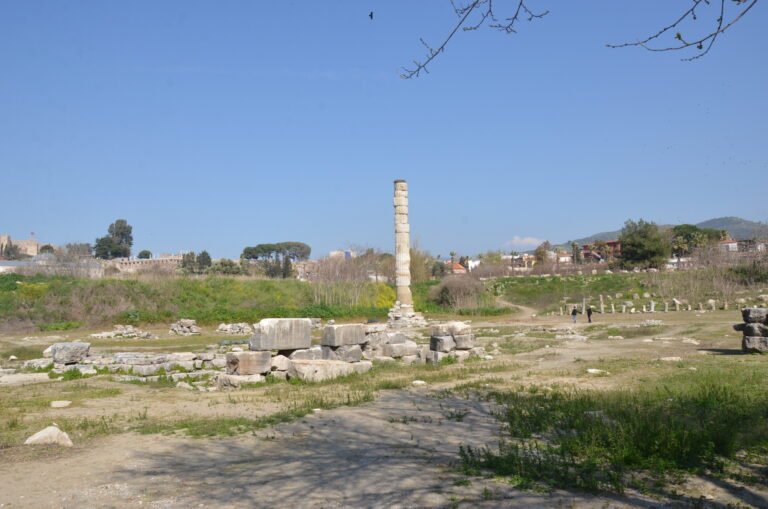
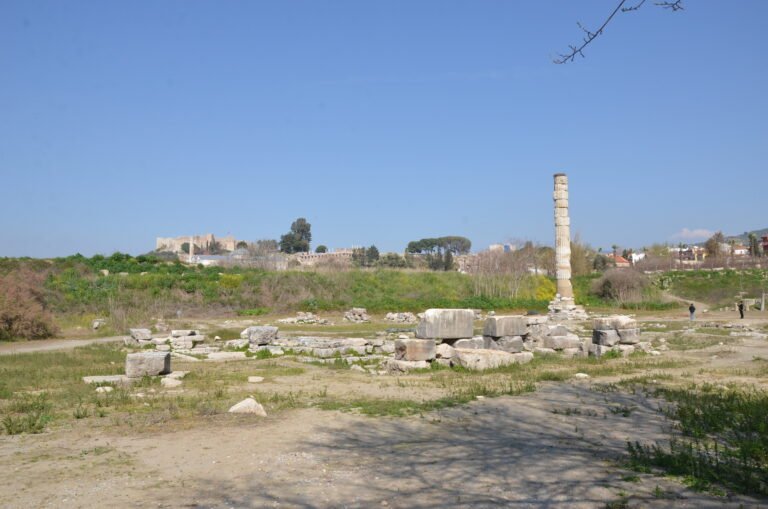
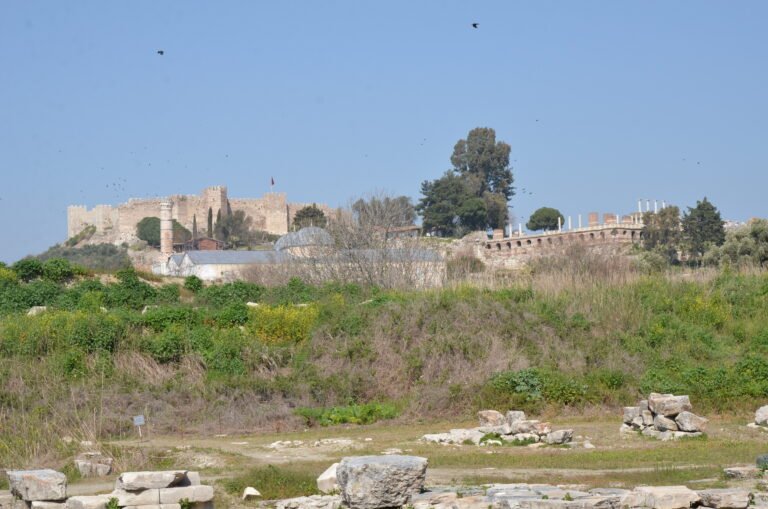
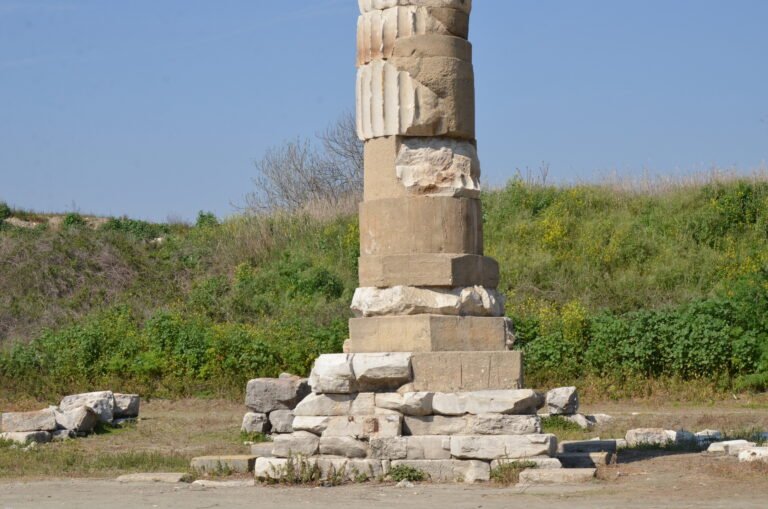
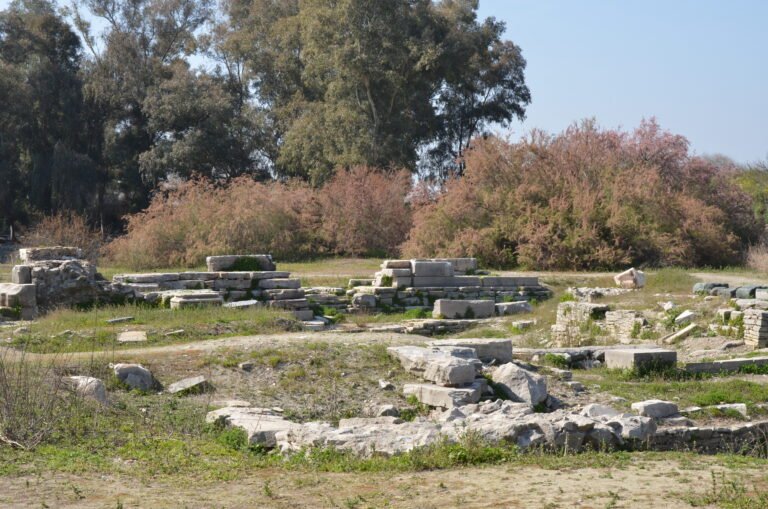
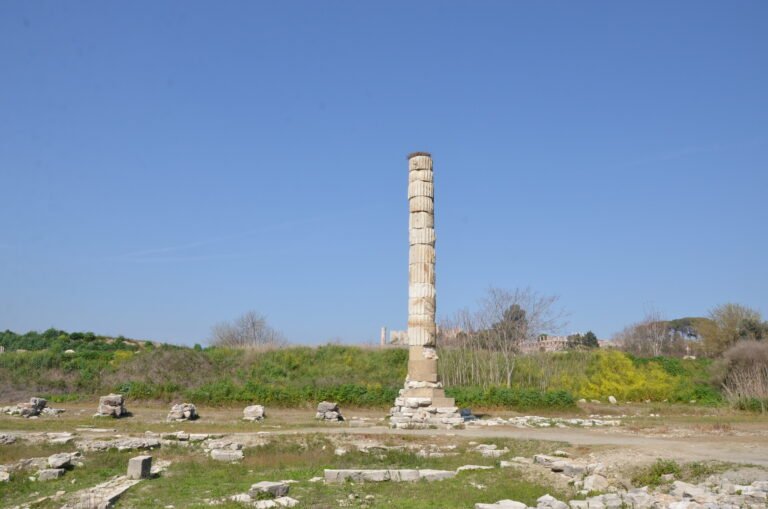
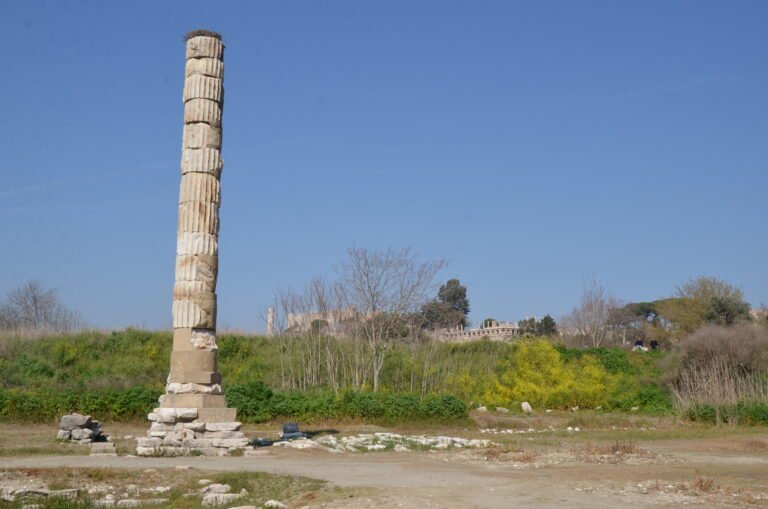
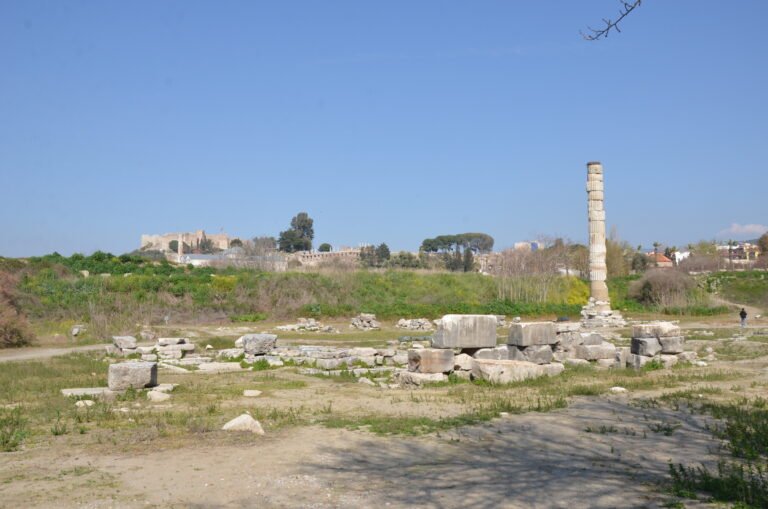
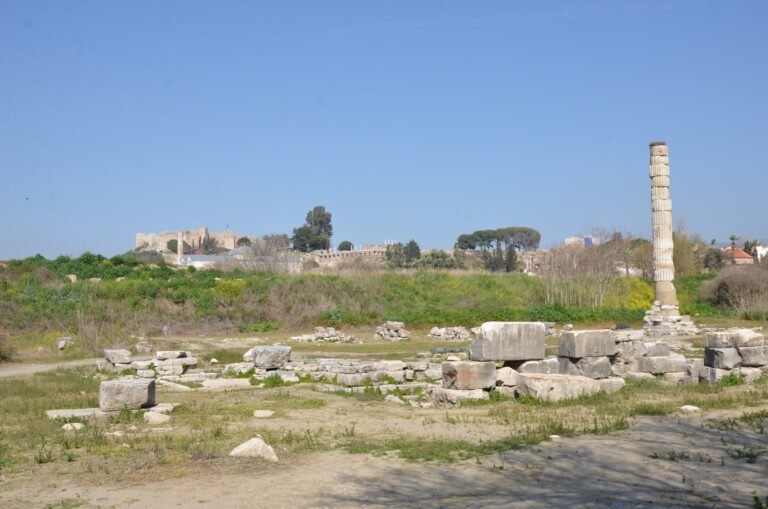
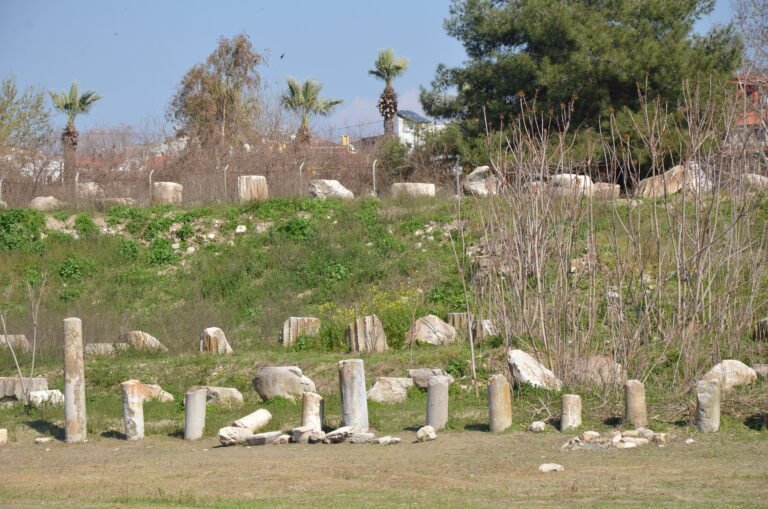
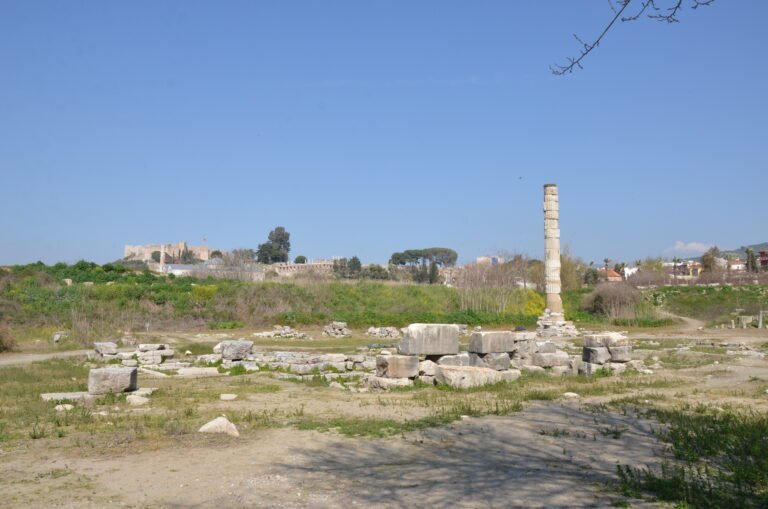
Although only foundations and a few scattered architectural fragments survive today, these discoveries have allowed historians to reconstruct the appearance and significance of the sanctuary.
Today, visitors can still walk through the site and imagine the enormous scale of one of antiquity’S greatest monuments.
Visiting the Temple of Artemis Today
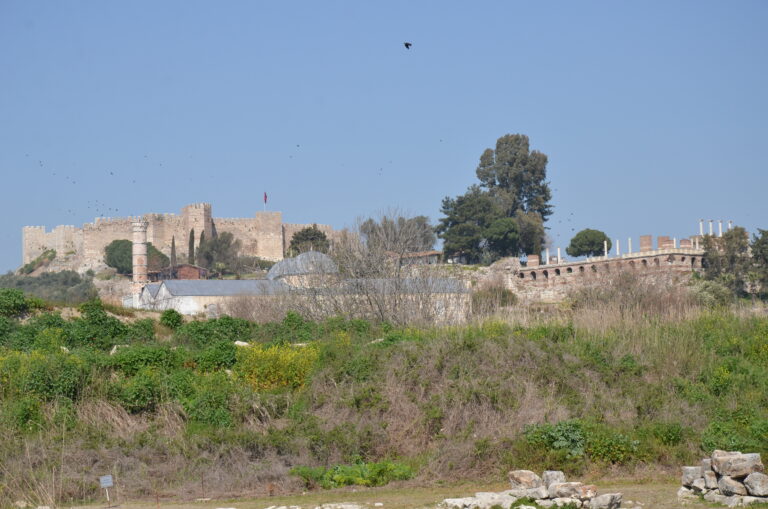
The Temple of Artemis is located near Selcuk, only a short distance from the main entrance of Ephesus Ancient City.
While much of the structure has disappeared over time, the site remains one of the most important historical landmarks in Turkey and an essential stop for travelers interested in ancient history, archaeology and the legacy of Ephesus.
Many visitors combine the Temple of Artemis with nearby attractions such as:
Conclusion
The Temple of Artemis was far more than a monumental building. It was a sacred symbol of Ephesus, a masterpiece of ancient engineering and a reflection of the spiritual traditions of Anatolia.
Even in ruins, the Artemision continues to inspire historians, archaeologists and travelers from around the world. Its legacy survives as one of the greatest achievements of the ancient Mediterranean civilization and as a timeless reminder of Ephesus’s importance in world history.