Temple of Artemis
About Temple of Artemis
Located near Selcuk and Ephesus Ancient City in western Turkey, the Temple of Artemis was once one of the most magnificent religious structures of the ancient world. Known as the Artemision, the temple was dedicated to Artemis, the powerful goddess associated with fertility, nature, protection, and the hunt.
Although only a few remains survive today, the Temple of Artemis continues to attract visitors from around the world because of its extraordinary historical, architectural, and cultural significance. In antiquity, it was recognized as one of the Seven Wonders of the Ancient World and stood as a symbol of the wealth and influence of Ephesus.
The History of the Temple of Artemis
The earliest sacred structures on the site date back to the Bronze Age, long before the rise of the Greek city of Ephesus. Over time, the sanctuary evolved into one of the most important religious centers in Anatolia.
The most famous version of the temple was constructed during the 6th century BC under the sponsorship of the Lydian king Croesus. Built almost entirely from marble, the structure became one of the largest temples of the ancient world.
Ancient writers described the temple as an architectural masterpiece decorated with monumental columns, sculptures, and artistic details created by some of the most skilled craftsmen of the period.
In 356 BC, according to ancient sources, the temple was deliberately burned by a man named Herostratus, who sought fame through destruction. The temple was later rebuilt on an even grander scale during the Hellenistic period.
For centuries, the Artemision remained a major pilgrimage destination, attracting merchants, rulers, pilgrims, and travelers from across the Mediterranean world.
The Temple of Artemis also played a central role in the economy and identity of Ephesus. Religious festivals, trade activities, and large gatherings connected to Artemis brought enormous wealth to the city.
During the Roman and early Christian periods, the influence of the Artemis cult gradually declined. By late antiquity, much of the temple was damaged, abandoned, or dismantled, with some materials reused in later buildings throughout the region.
Artemis of Ephesus
The Artemis worshipped in Ephesus was different from the classical Greek Artemis commonly associated with hunting.
Artemis of Ephesus represented fertility, abundance, protection, and cosmic power. Her famous statues, discovered near the Prytaneion of Ephesus and now displayed in the Ephesus Museum, reflect a uniquely Anatolian interpretation of the goddess.
The deer became one of the sacred symbols associated with Artemis, while bees also held important religious meaning in the city. The priestesses serving the goddess were known as melissai, meaning “bees” in Greek.
What to See at the Temple of Artemis
The Remaining Column
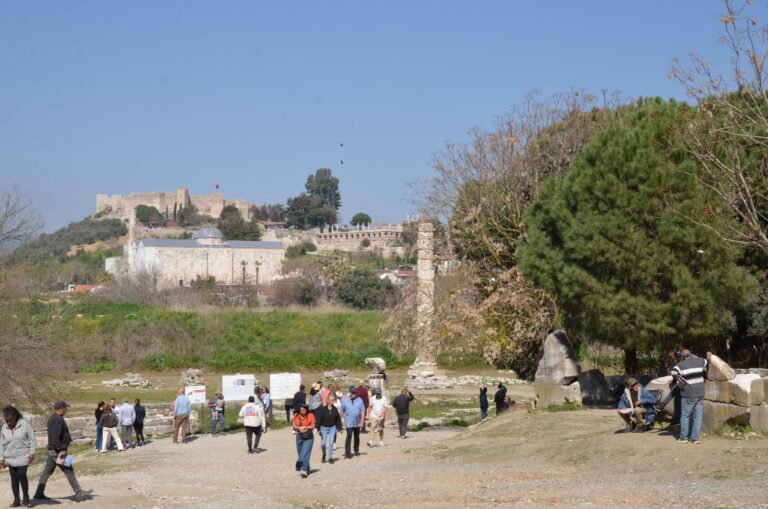
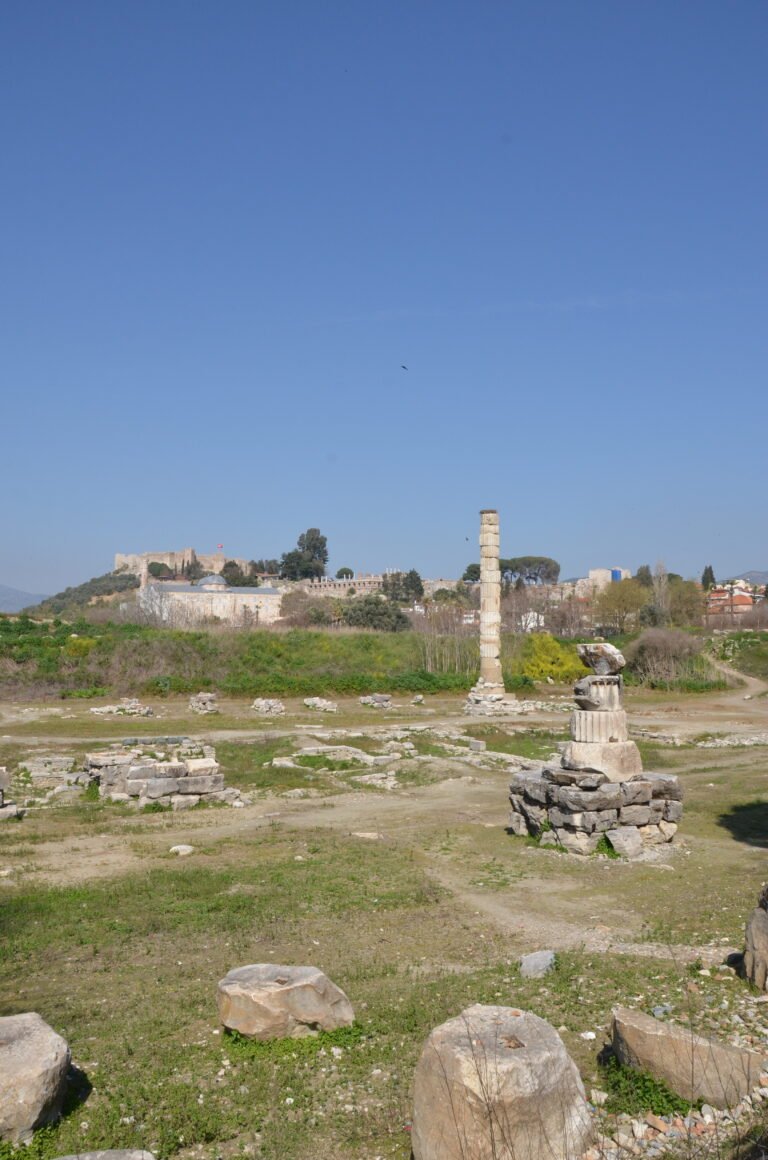
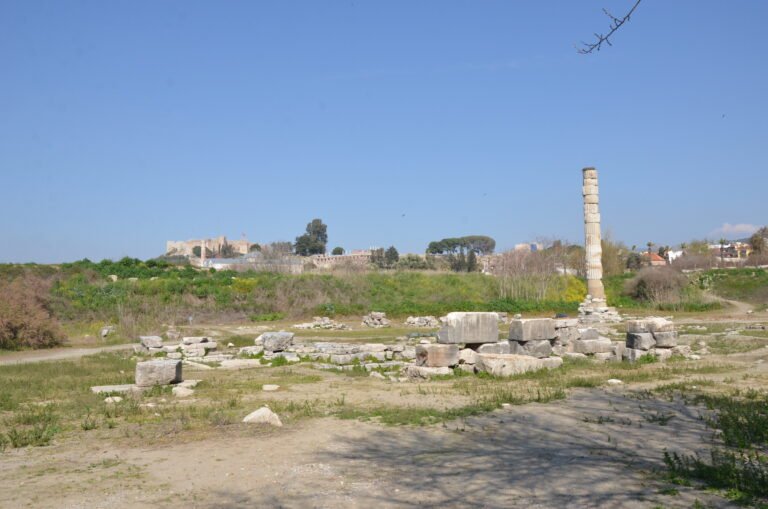
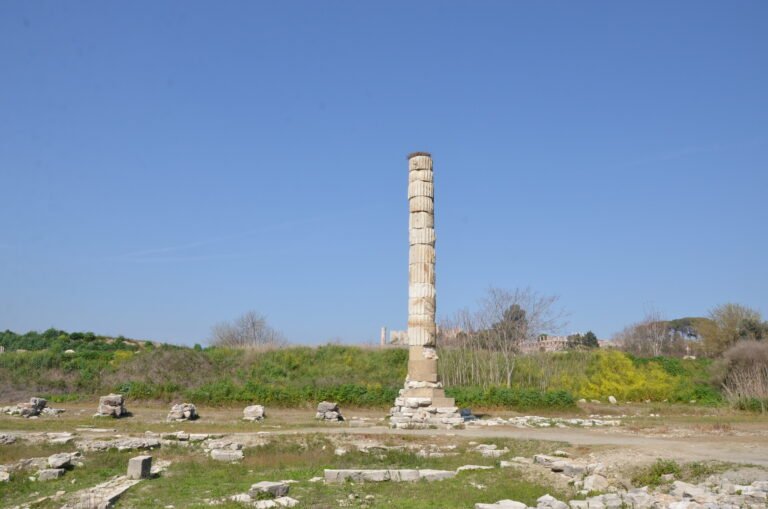
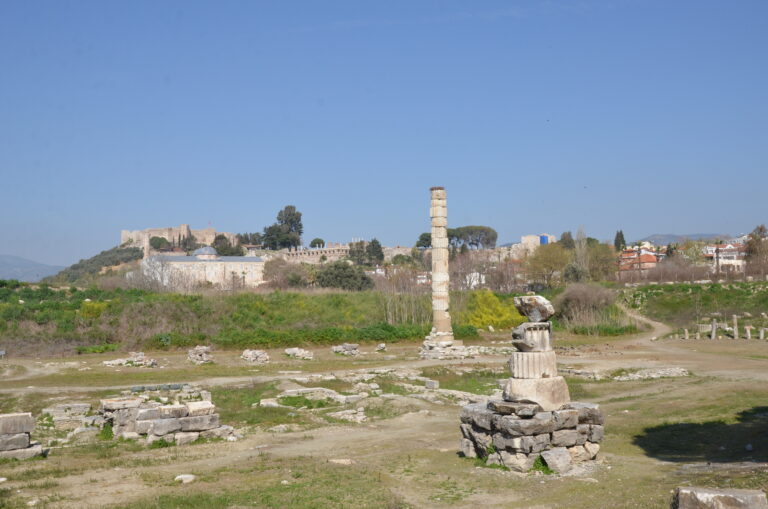
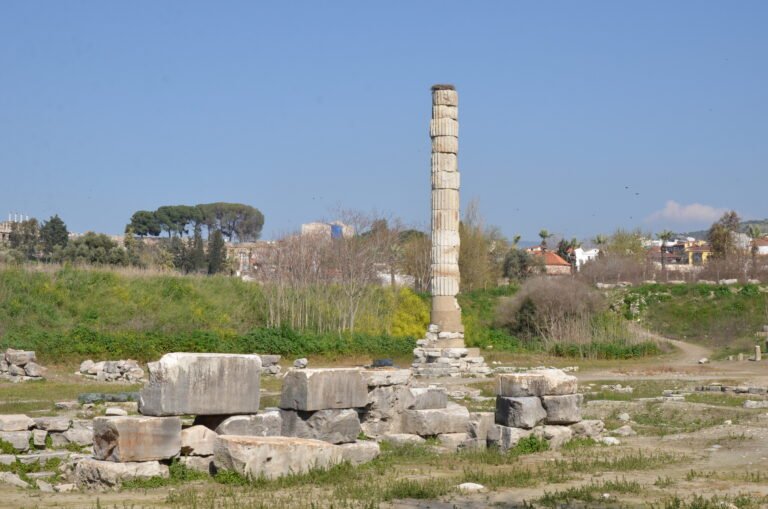
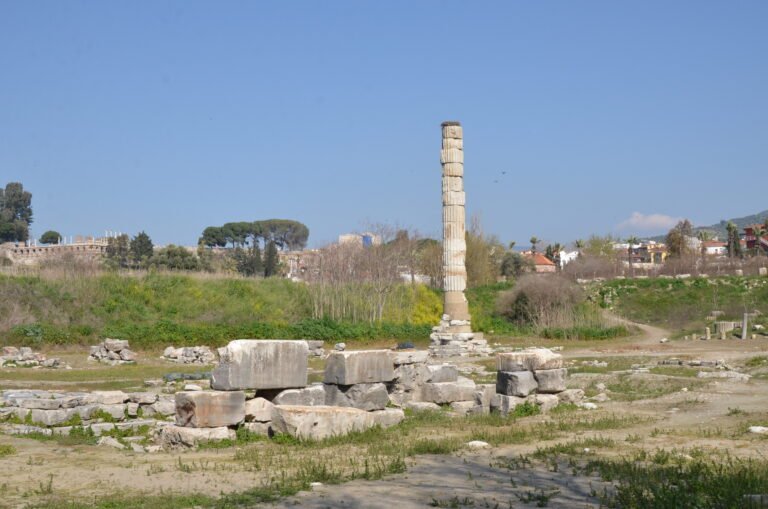
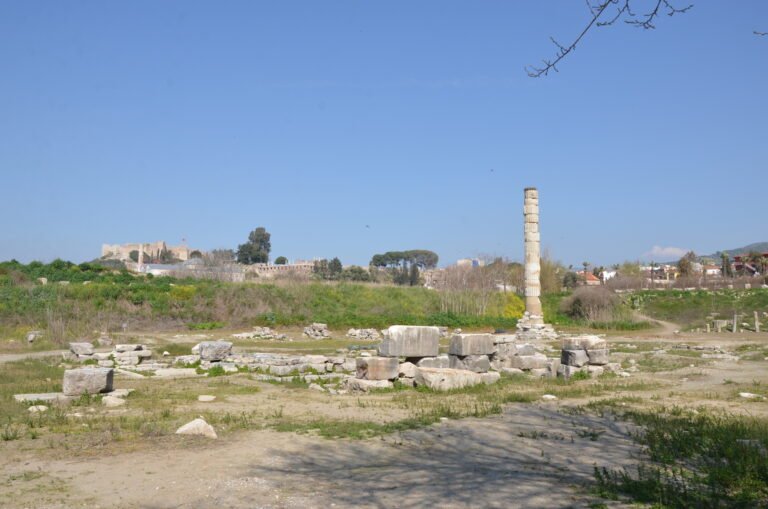
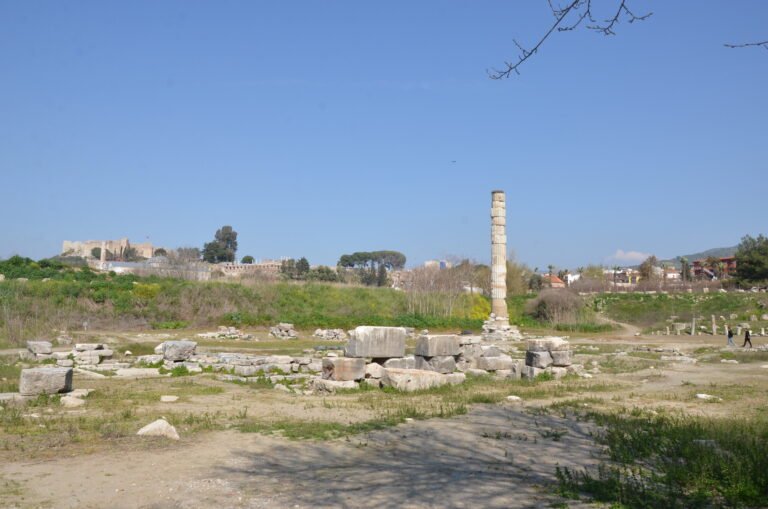
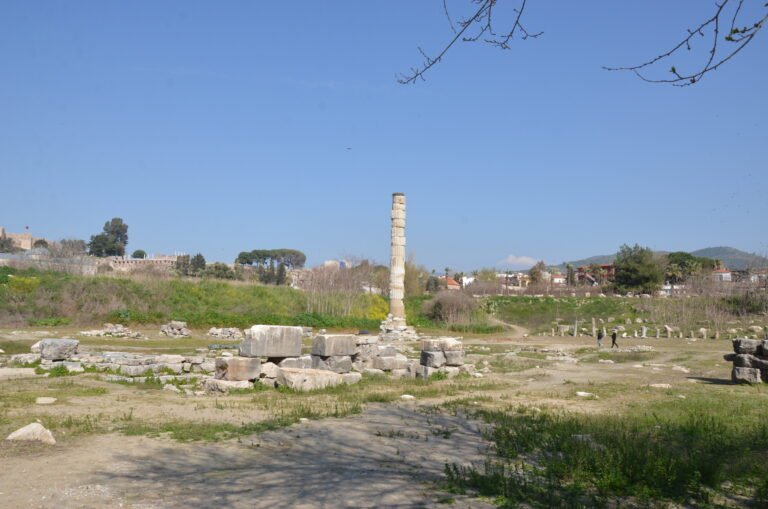
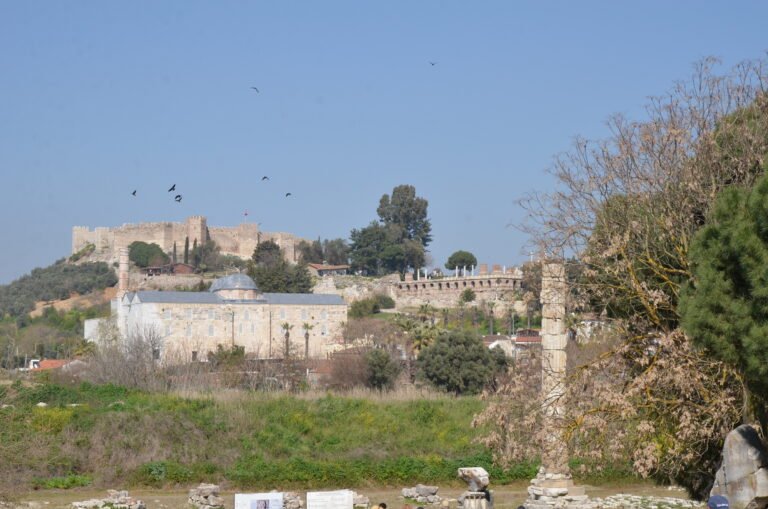
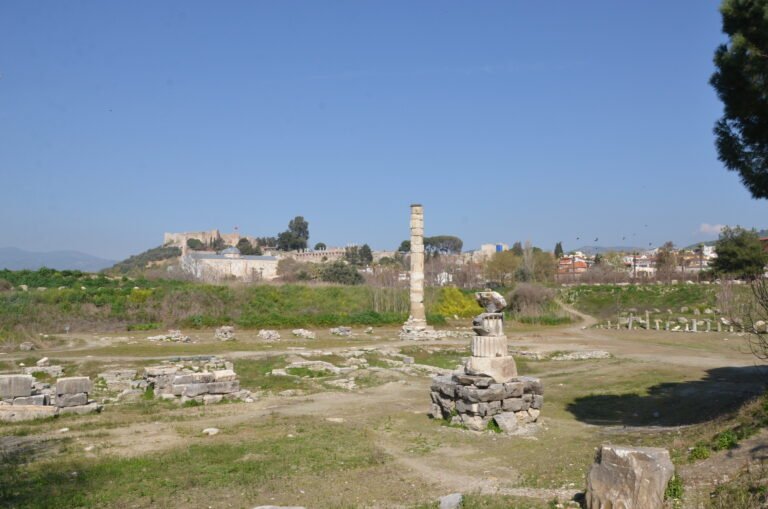
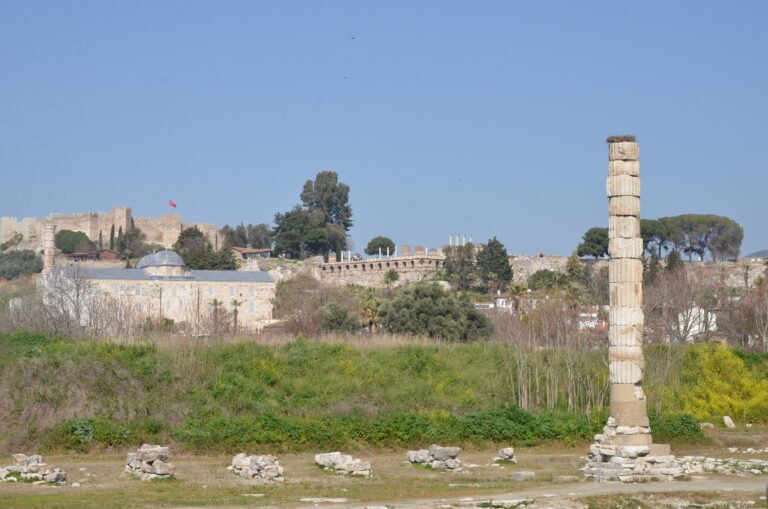
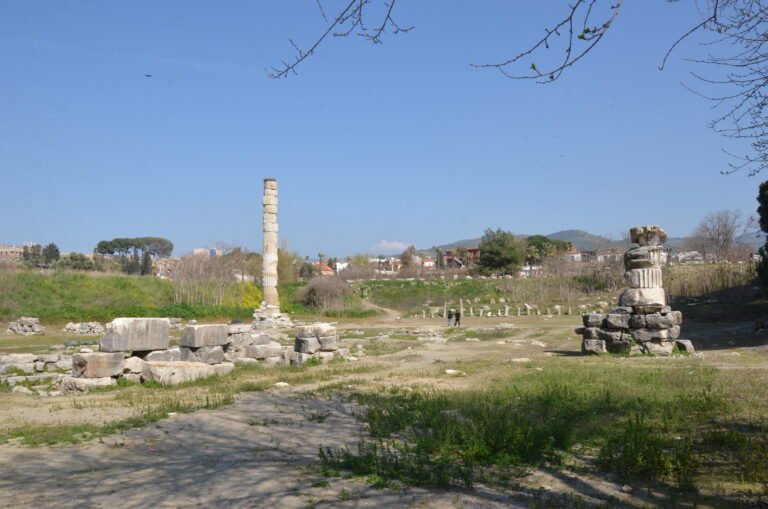
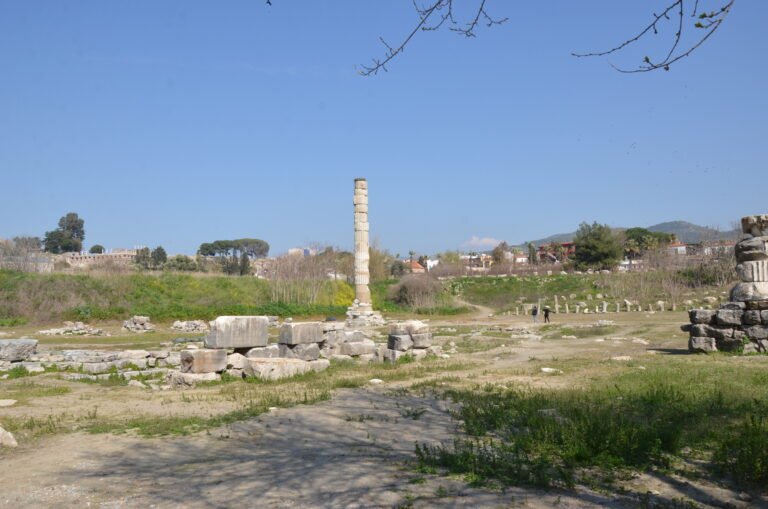
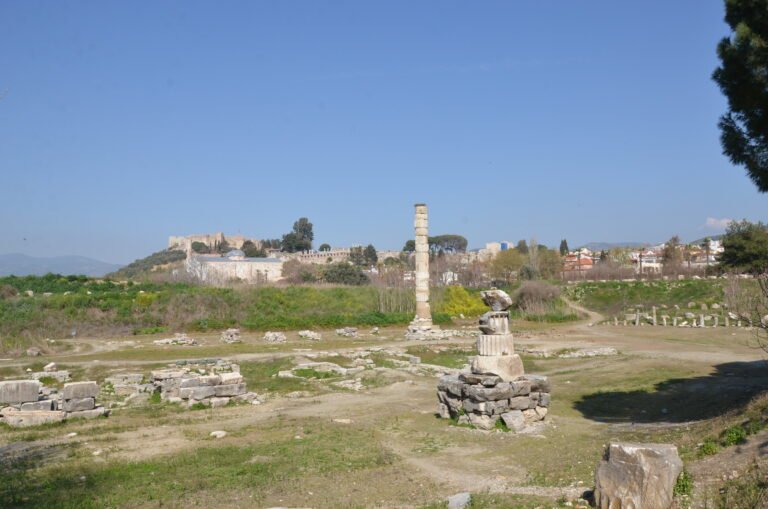
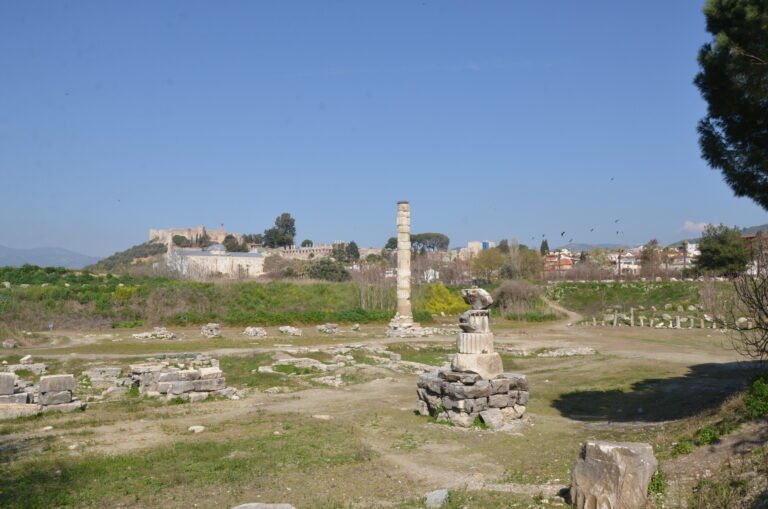
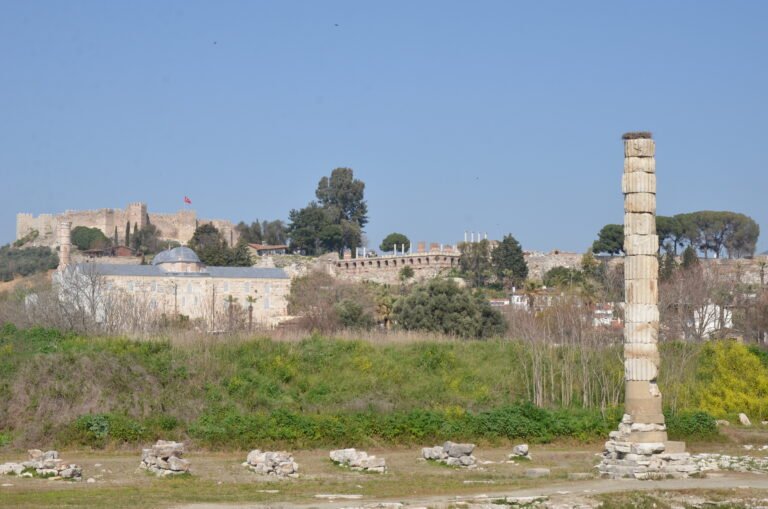
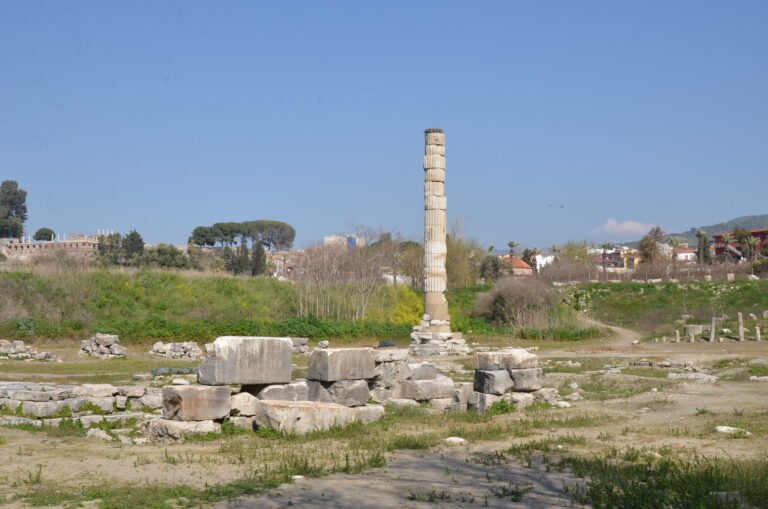
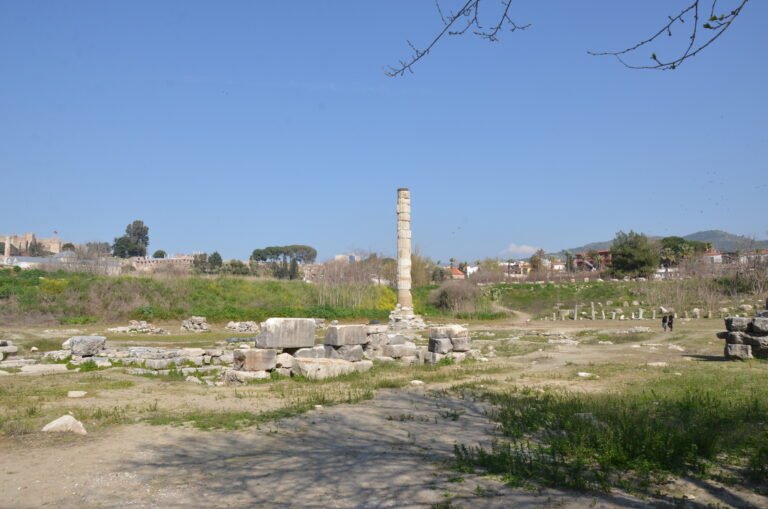
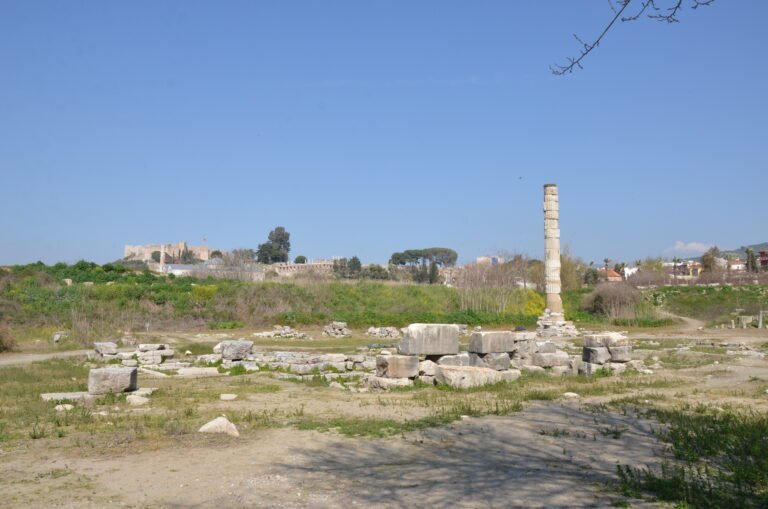
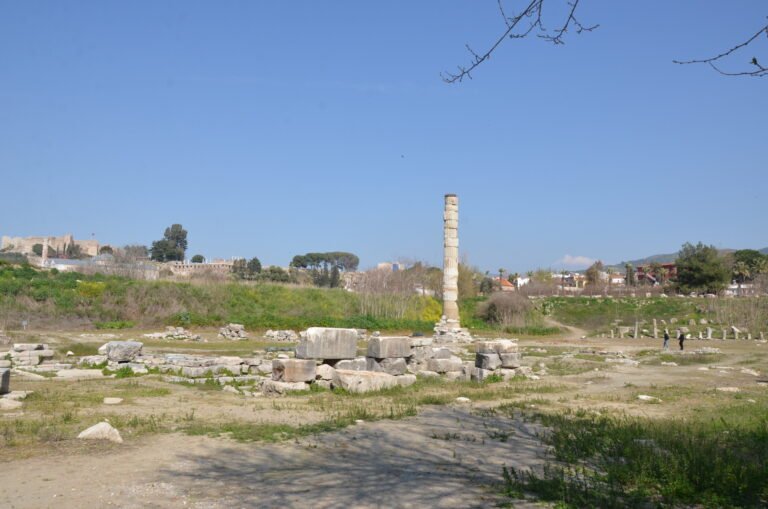
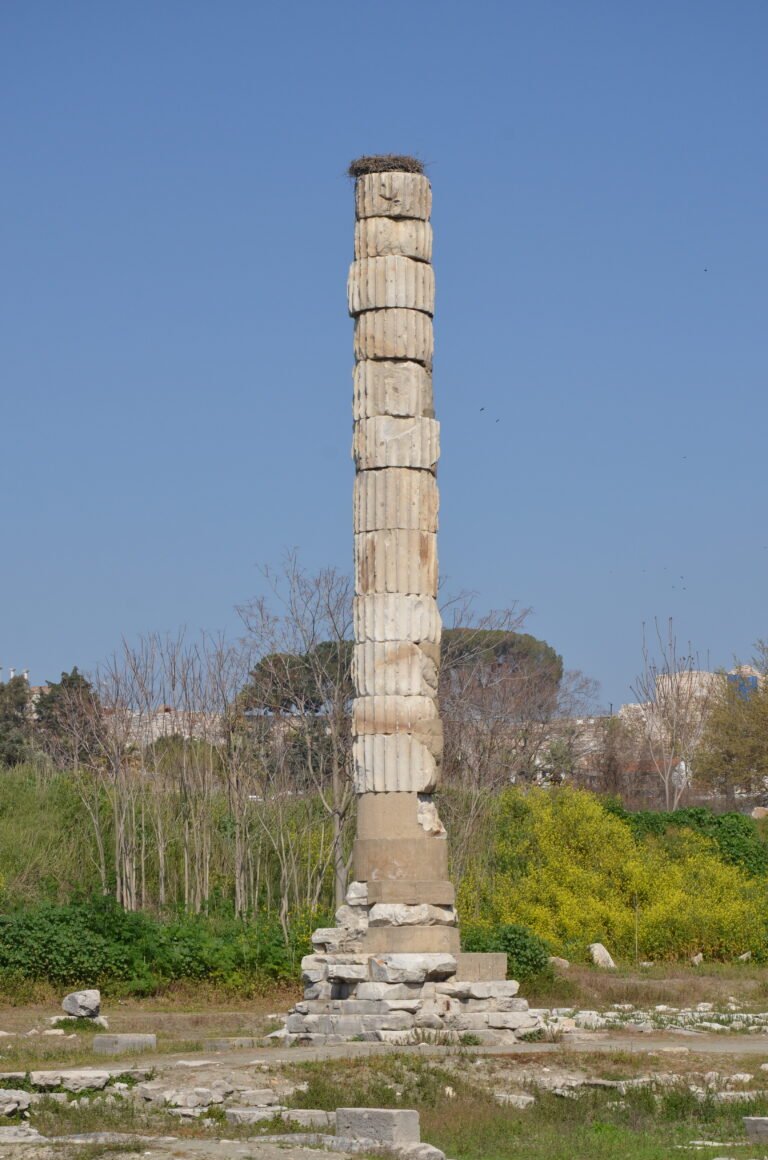
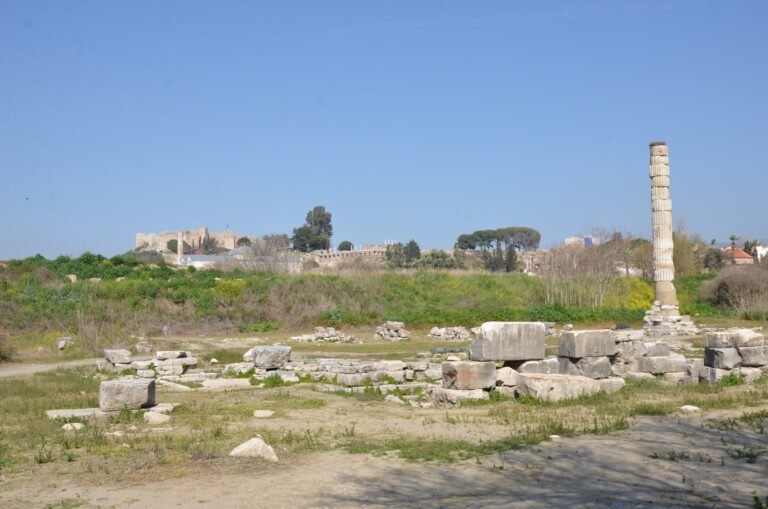
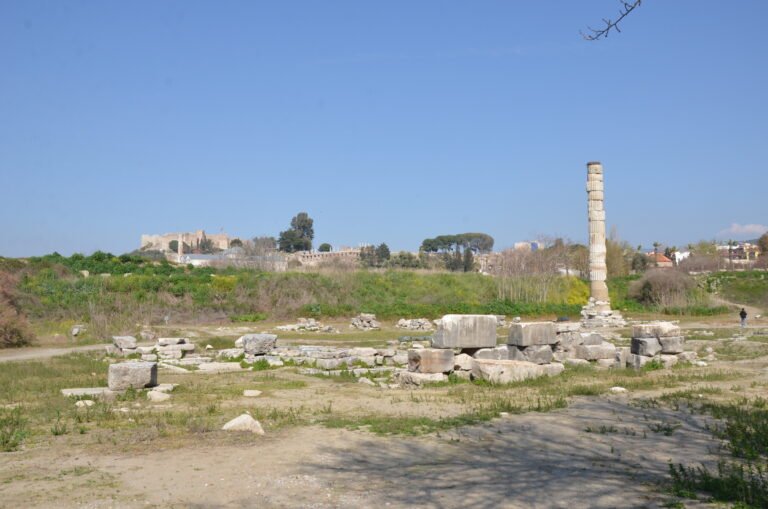
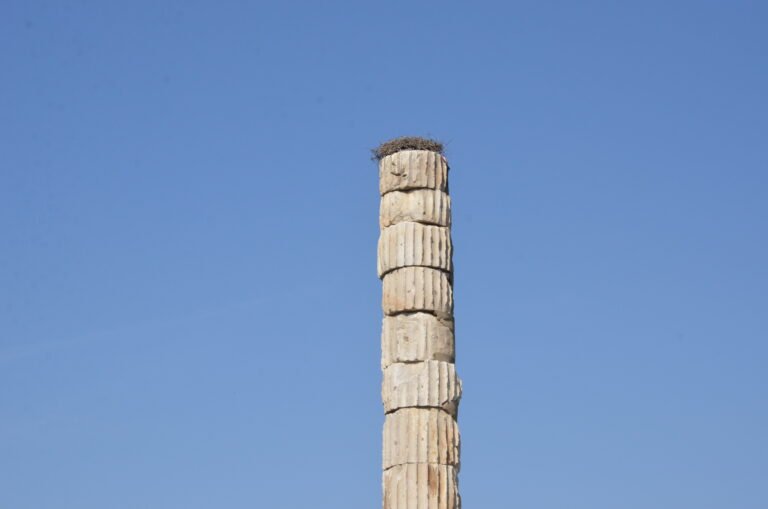
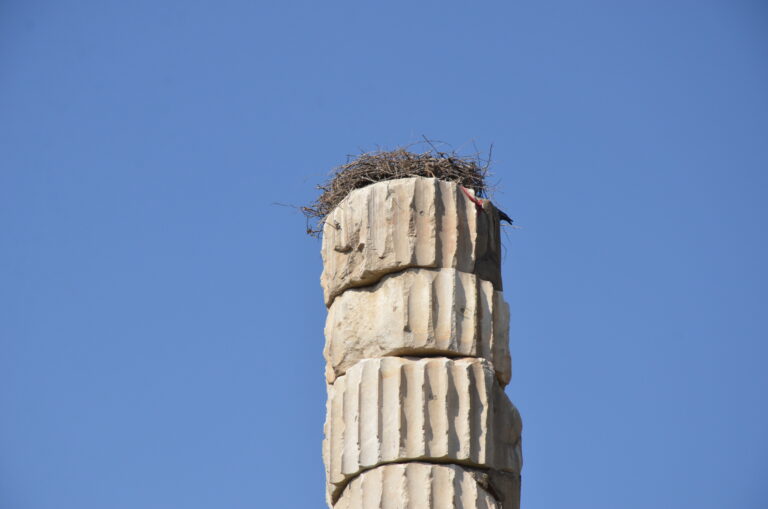
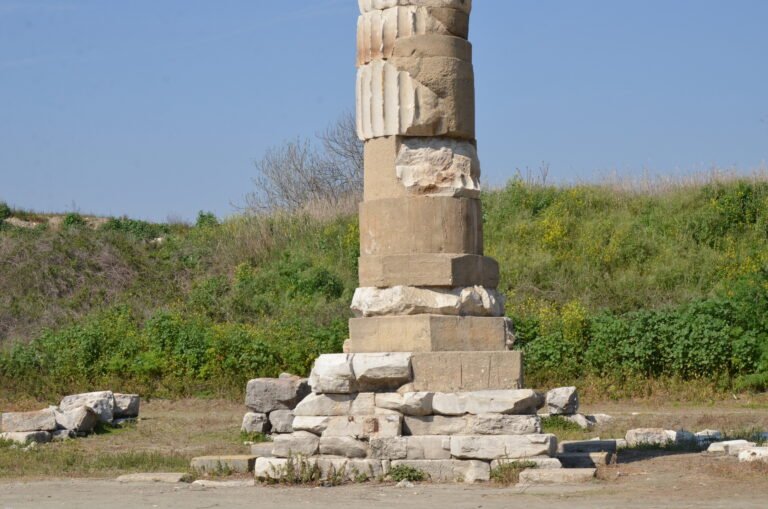
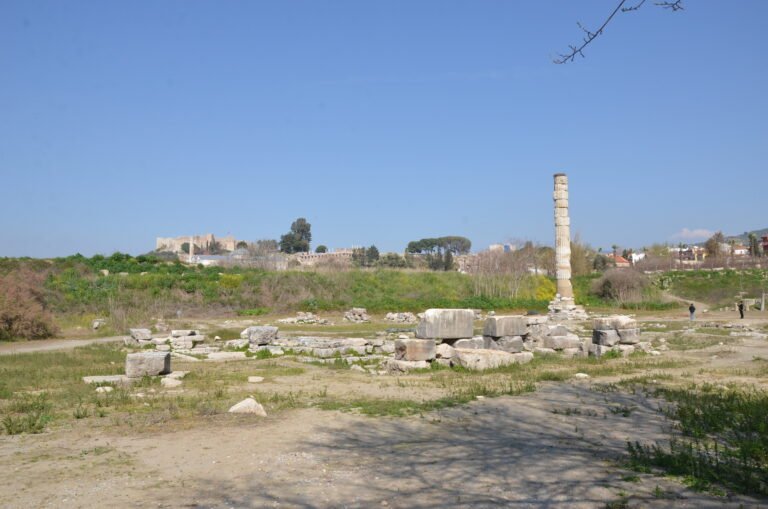
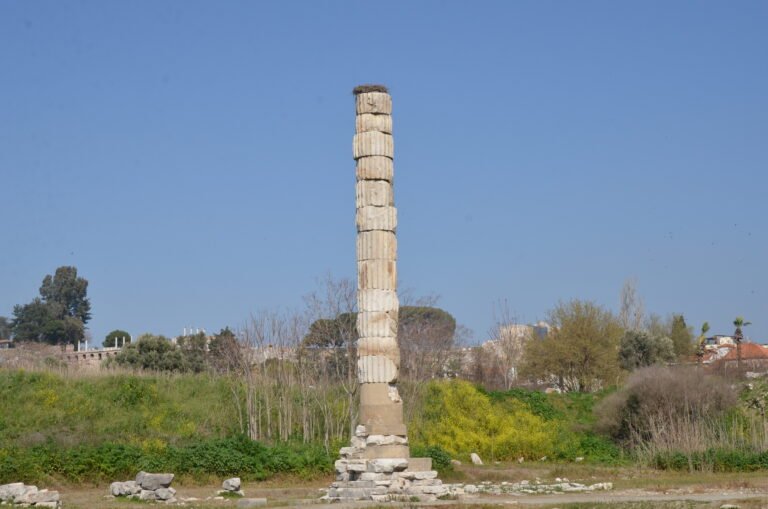
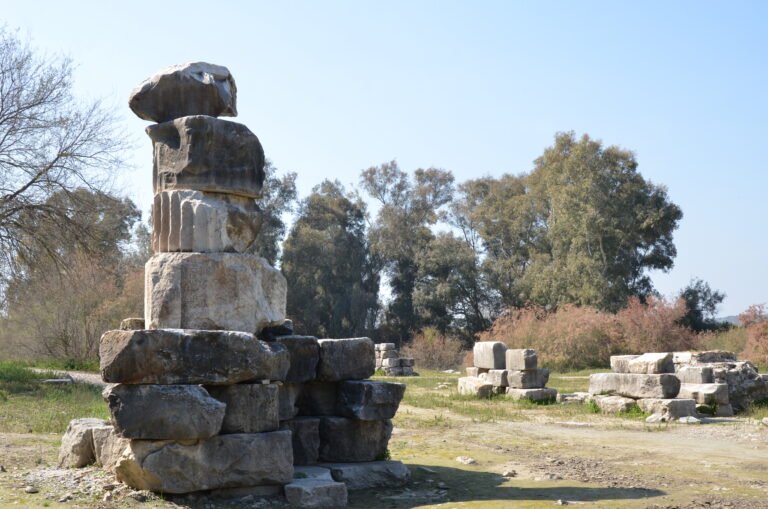
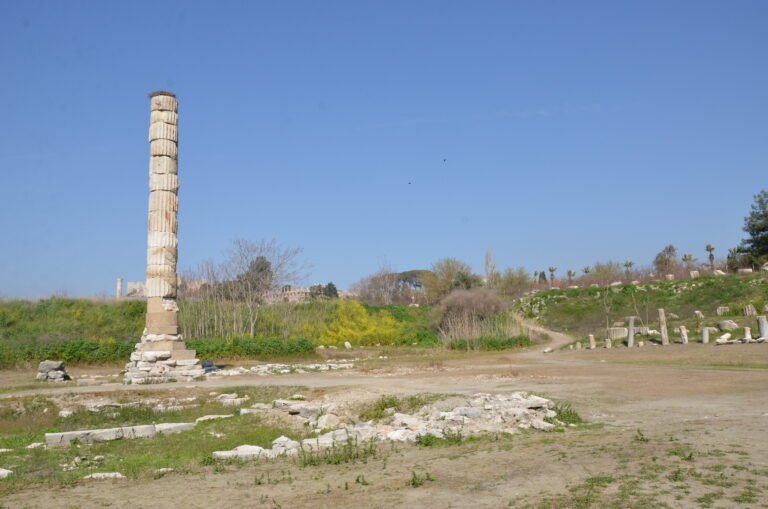
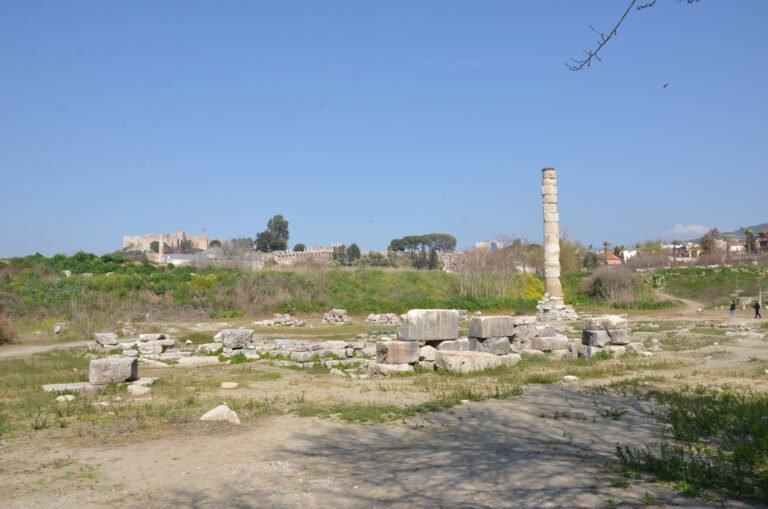
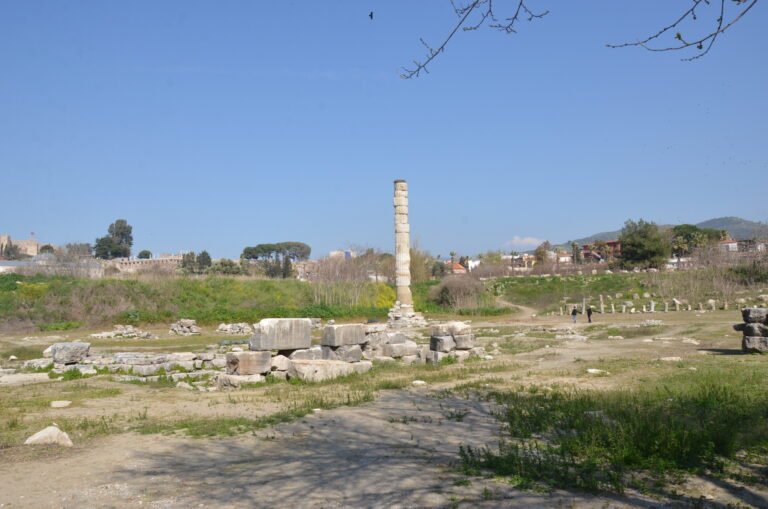
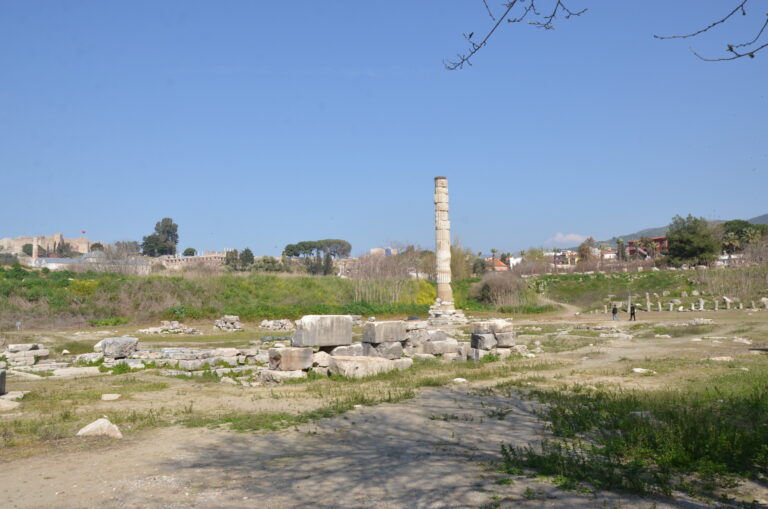
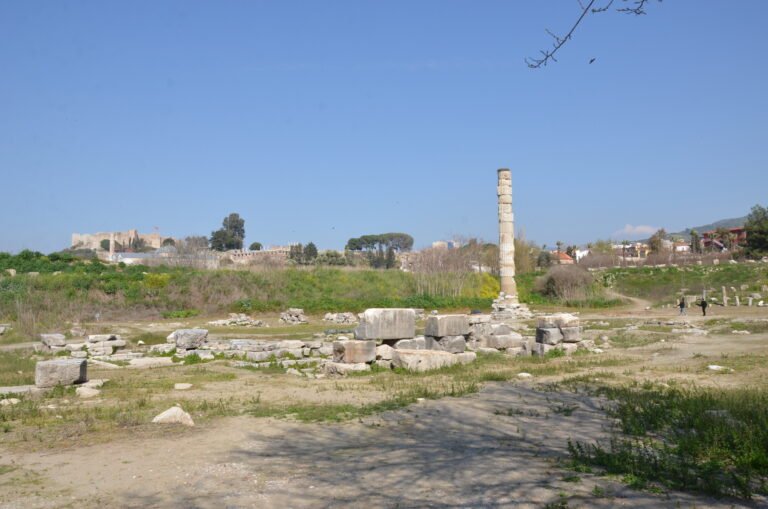
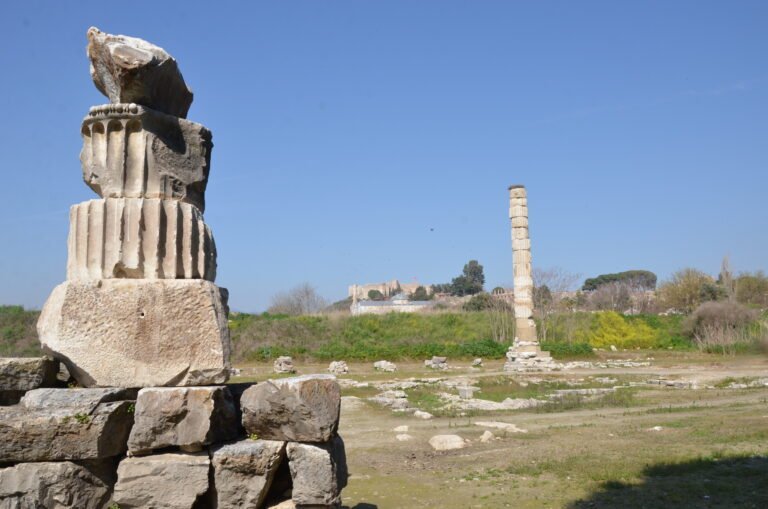
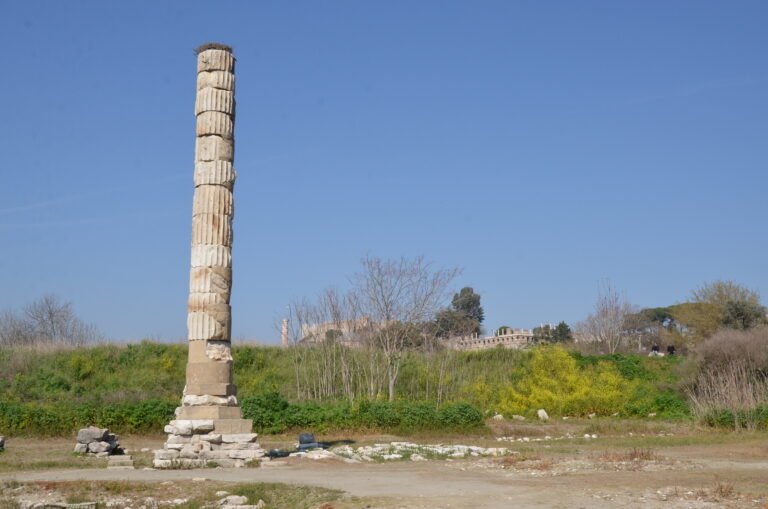
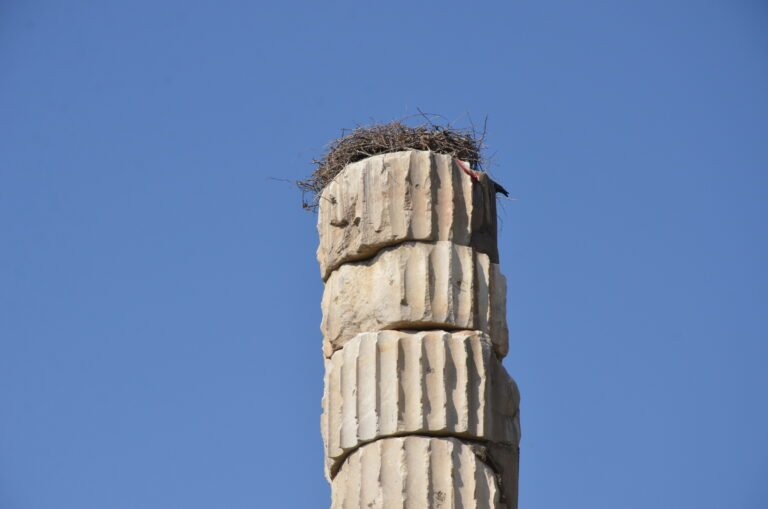
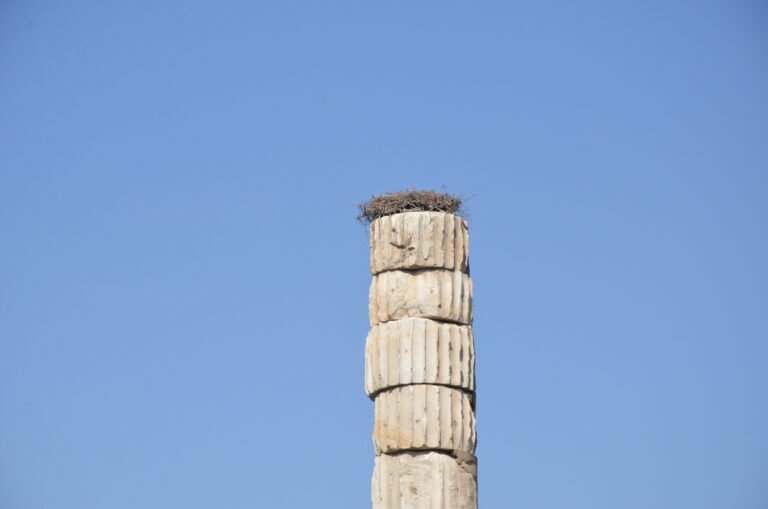
Today, the most recognizable feature of the site is the reconstructed column standing in the middle of the former temple area. Although little of the original structure survives, the site still carries enormous symbolic importance.
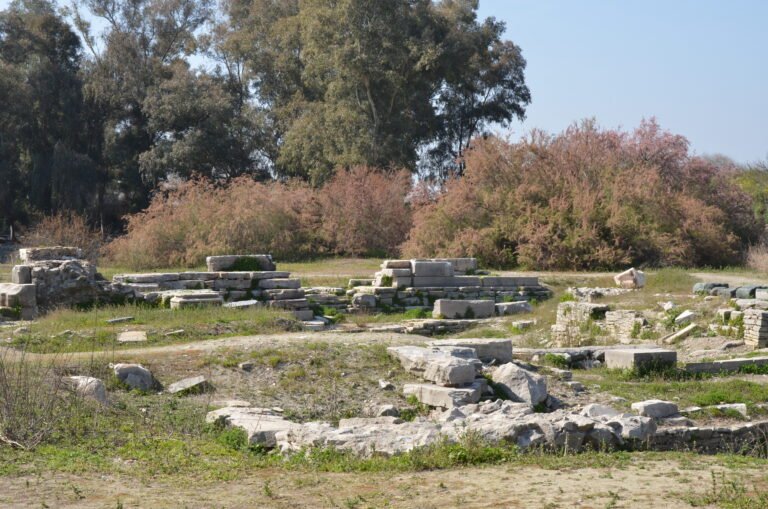
Archaeological Remains
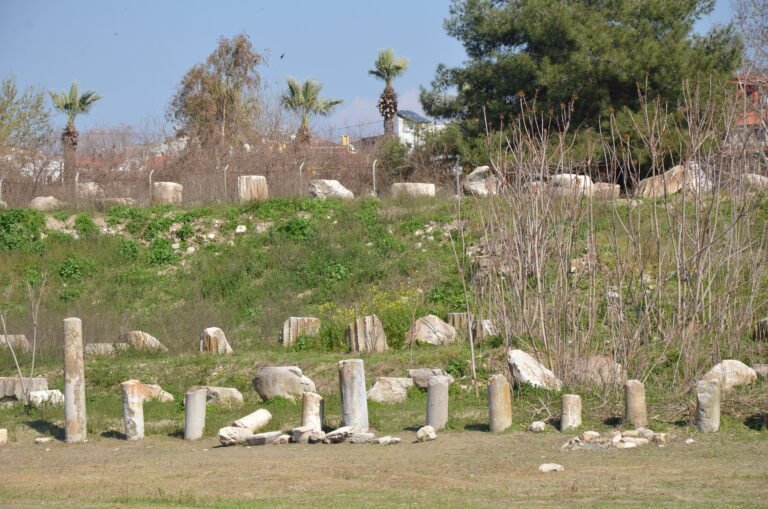
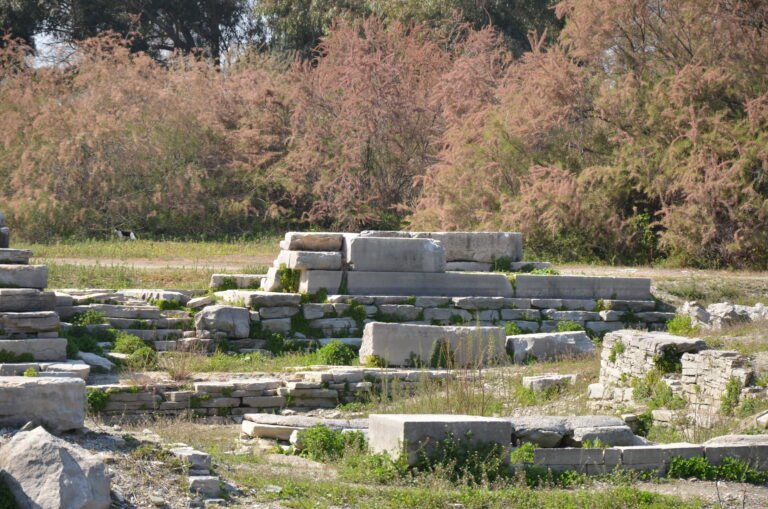
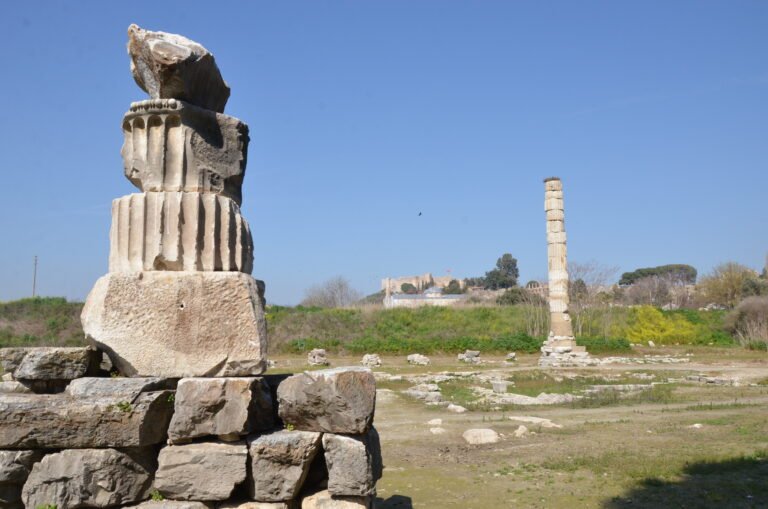
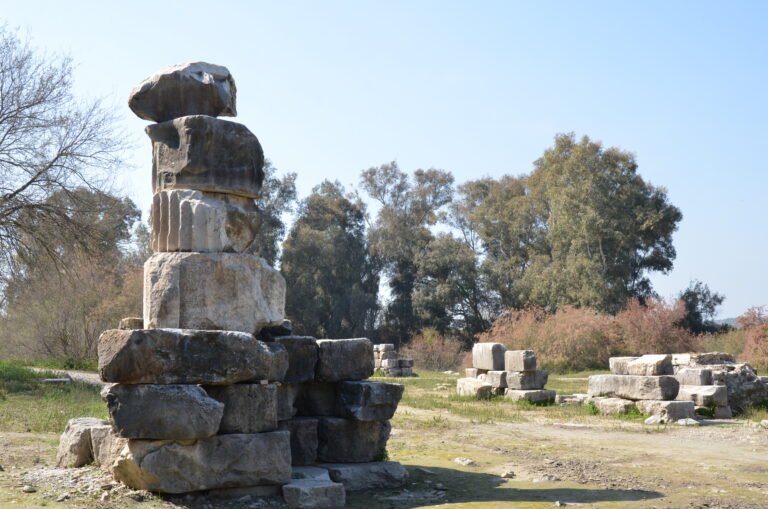
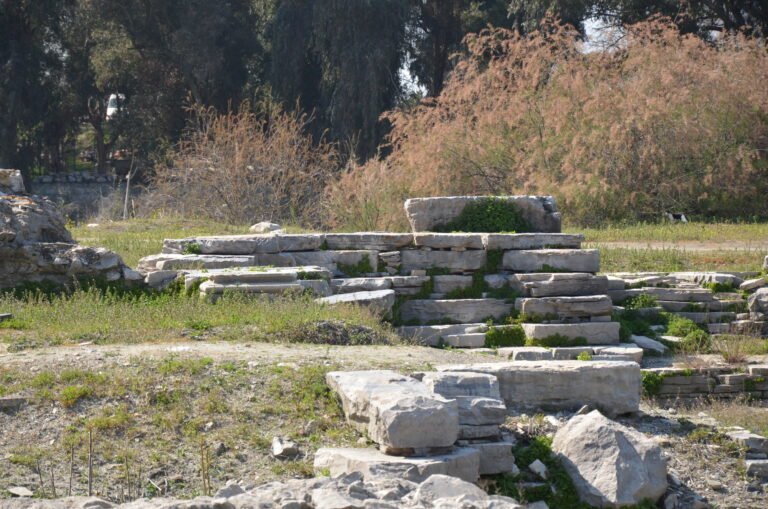
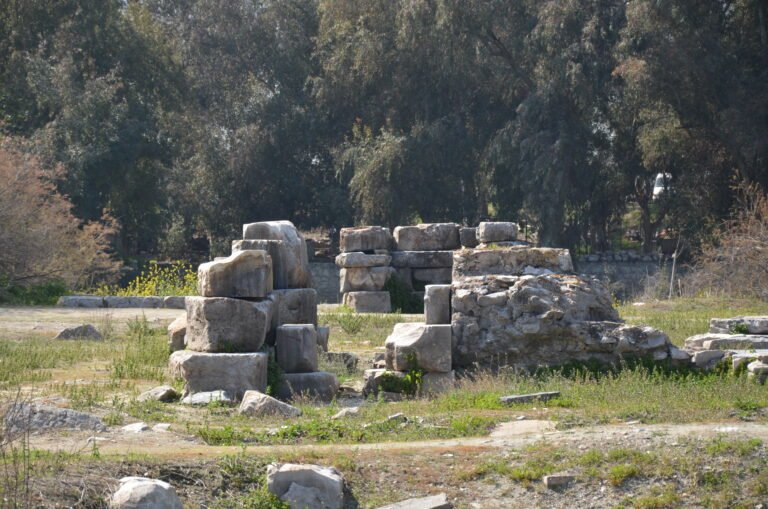
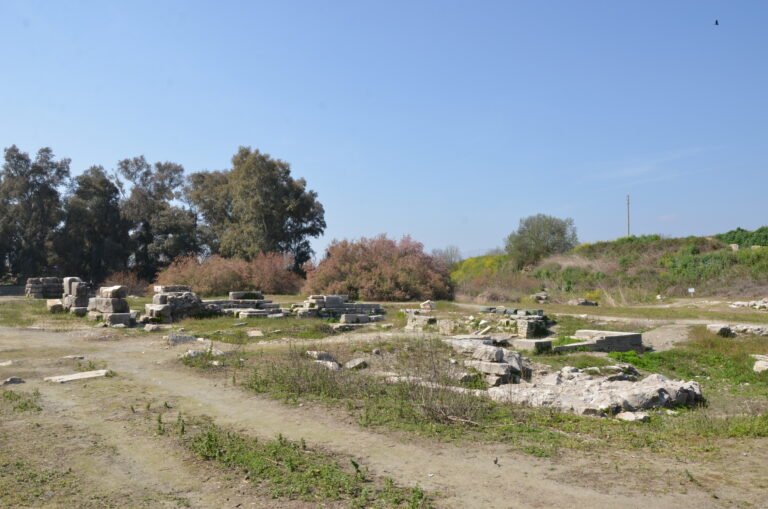
Visitors can see foundation remains, scattered marble blocks, and fragments connected to the ancient sanctuary.
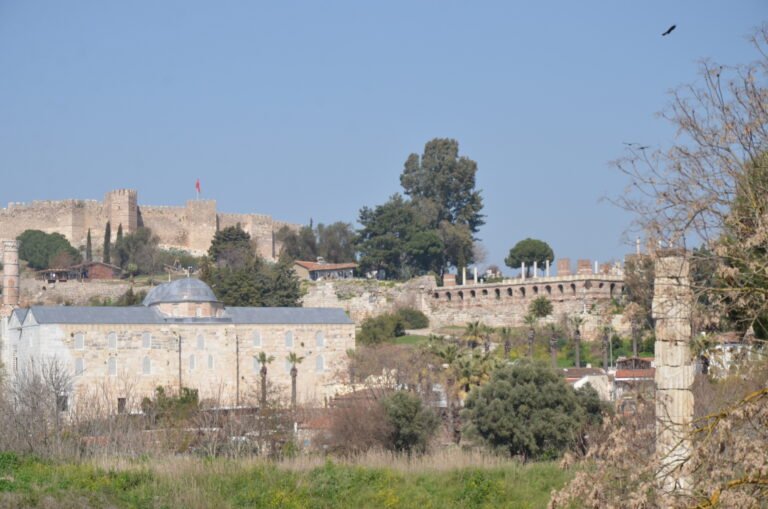
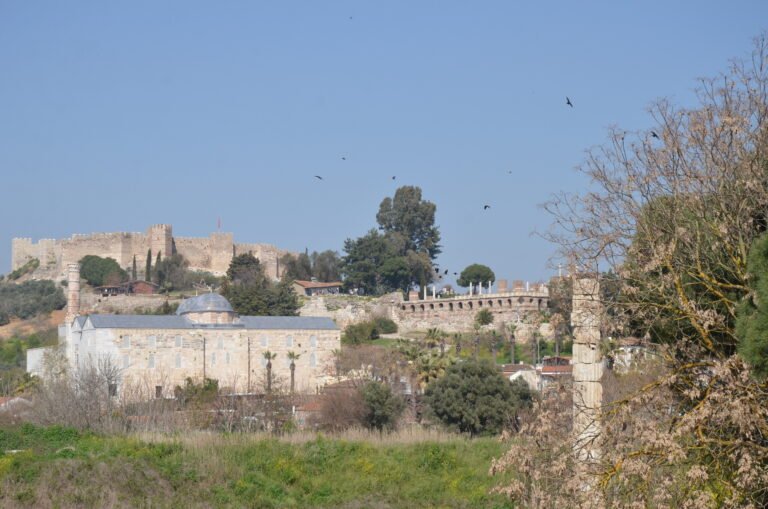
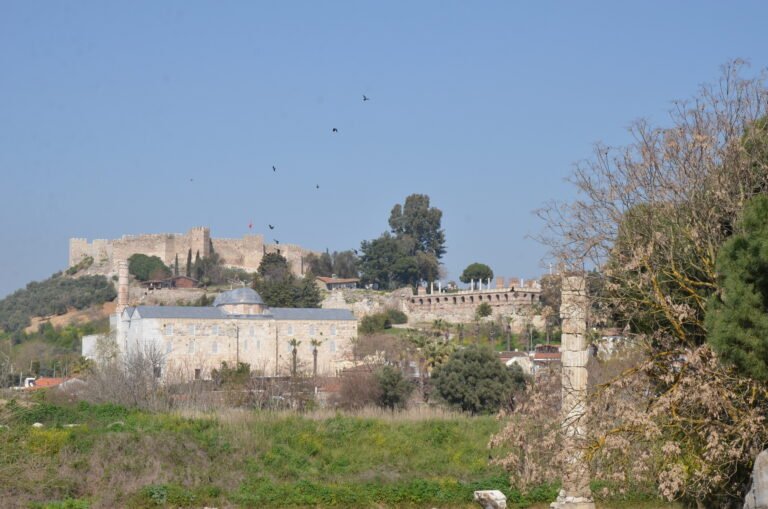
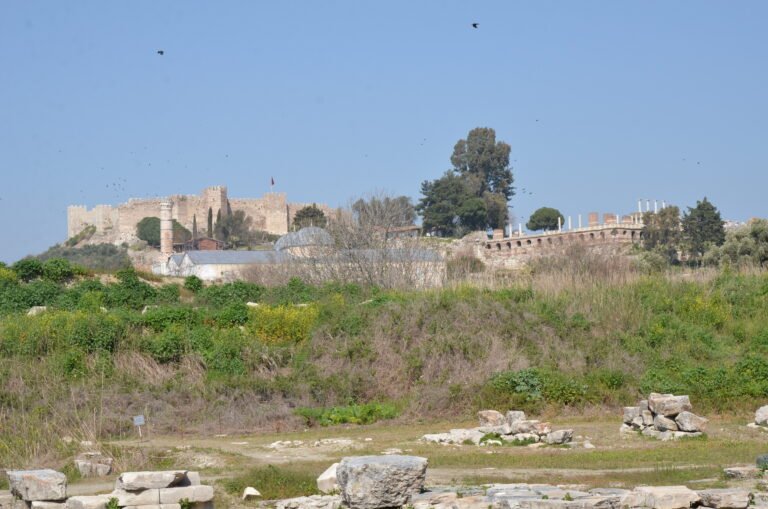
Views of Ayasuluk Hill
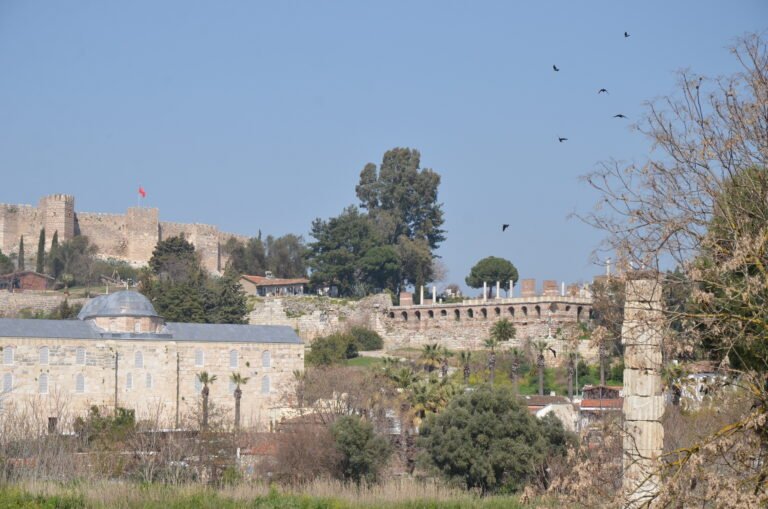
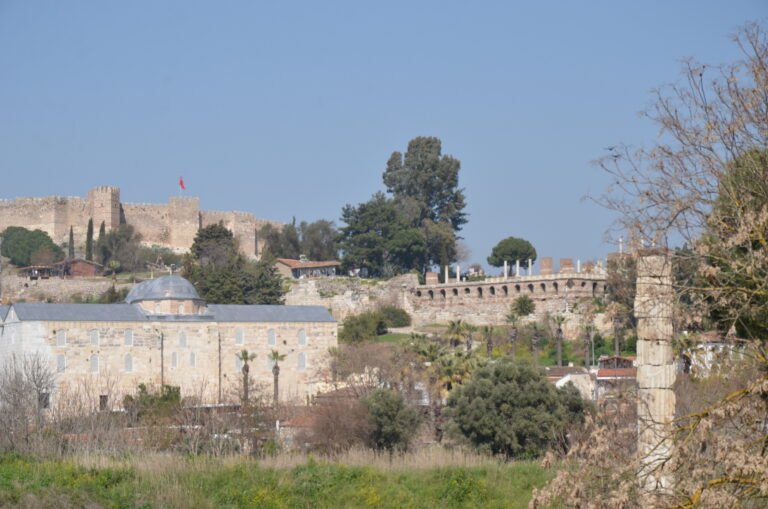
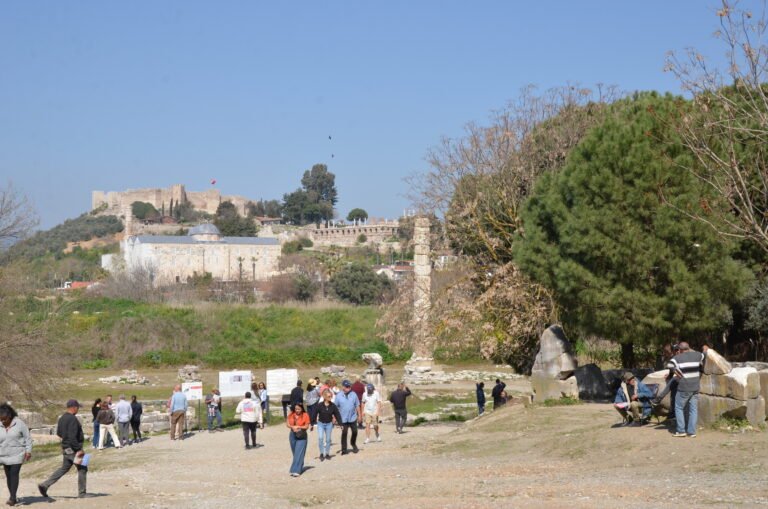
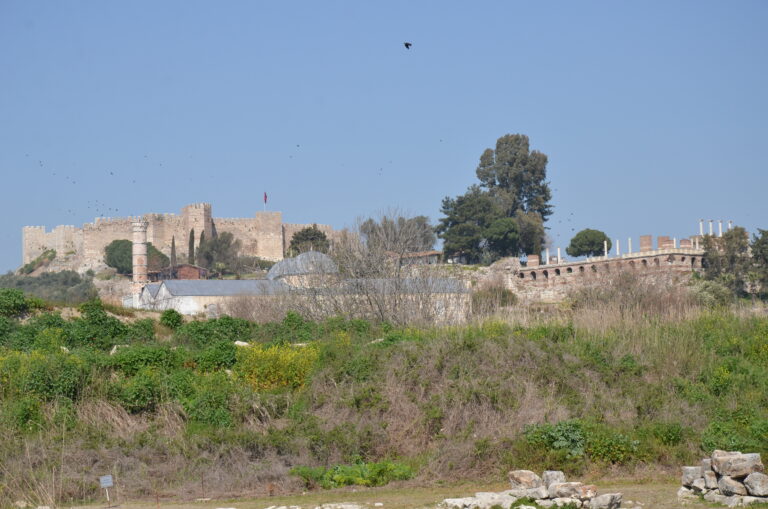
From the Temple of Artemis area, visitors can also enjoy views of:
- Basilica of St. John
- Ayasuluk Castle
- Isa Bey Mosque
- the Selcuk plain
showing the layered history of the region.
Why Visit the Temple of Artemis
Although the site appears modest compared to Ephesus Ancient City, the Temple of Artemis remains one of the most historically important locations in the ancient world.
For many travelers, visiting the site offers the opportunity to stand in the place where one of the Seven Wonders of the Ancient World once stood.
The temple is commonly combined with:
during the same day itinerary.
Plan Your Visit
The Temple of Artemis is located in Selcuk only a few minutes from Ephesus Ancient City and directly below Ayasuluk Hill.
The site is generally open year-round and can easily be visited on foot or by vehicle from Selcuk town center. Entrance is often free of charge, although conditions may vary depending on archaeological works and regulations.
Spring and autumn are considered the best seasons to visit thanks to the comfortable weather conditions.
Gallery